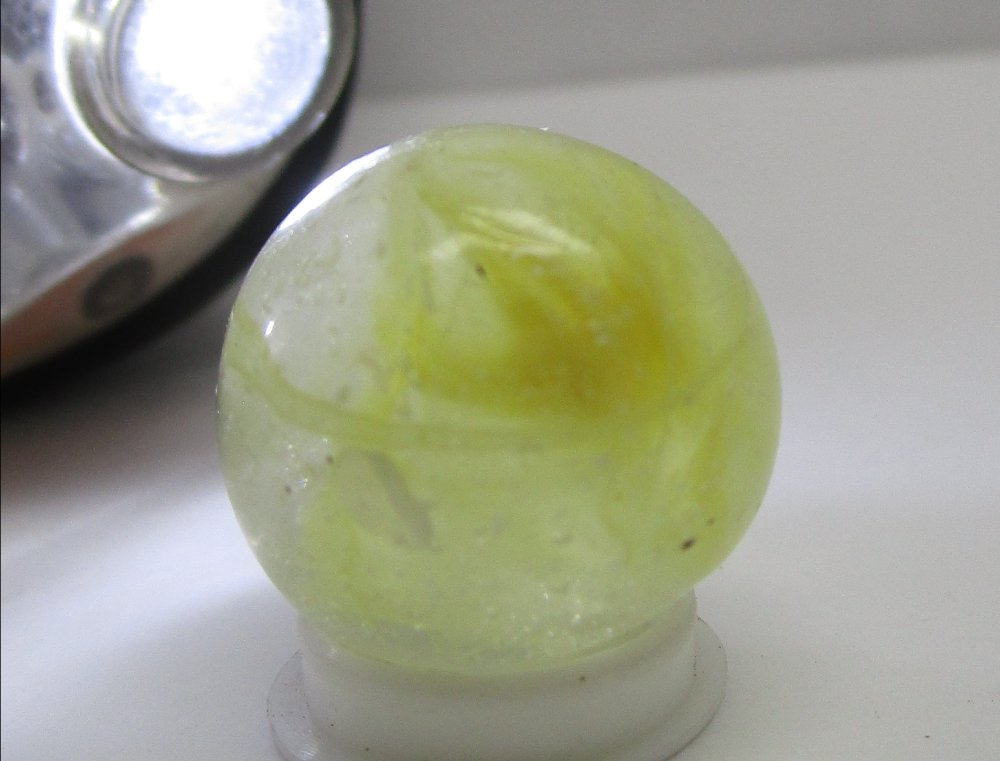

Determining the value of vintage marbles requires understanding multiple factors that interact to create market prices. While some marbles sell for a few dollars, others command thousands at auction. This comprehensive value guide explains how collectors and dealers assess marble worth, provides current price ranges for major types, and helps you evaluate your own collection’s potential value.
What Factors Determine Marble Value?
Five primary factors determine vintage marble values, with each contributing significantly to final market prices. Understanding how these factors interact helps you assess any marble’s potential worth.
Age and manufacturing method form the foundation of value assessment. Handmade marbles, particularly those produced in Germany between 1850 and 1920, generally command higher prices than machine-made examples. The handcrafted nature, historical significance, and limited surviving quantities create strong collector demand. Machine-made marbles from 1900-1970 can still be valuable, particularly rare types from desirable manufacturers, but typically sell for less than comparable handmade pieces.
Type and rarity constitute the second major value factor. Certain marble types are inherently rarer than others due to limited production, difficult manufacturing techniques, or high attrition rates over time. Lutz marbles with goldstone, sulphides containing figures, and certain rare patterns command premiums regardless of other factors. Common types like basic machine-made cat’s eyes or standard swirls bring modest prices even in excellent condition.
Size affects value dramatically, often more than beginning collectors realize. Marbles larger than one inch diameter command significant premiums, with prices increasing exponentially as size grows. A handmade swirl marble measuring 0.75 inches might sell for $50, while the identical pattern in 1.5 inches could bring $300-500, and a 2-inch example might reach $1,000-2,000. Very small marbles under 0.5 inches also carry premiums for their scarcity, though not as dramatic as large sizes.
Condition represents perhaps the most crucial value determinant for any given marble. The difference between mint condition and heavily damaged can be tenfold or more. A Lutz marble in perfect condition might sell for $2,000, while the same marble with significant chips might bring only $200-300. Collectors grade marbles on a scale from mint (9.0-10.0) down through near mint, good, collectible, and poor, with each grade level significantly affecting market value.
Color and eye appeal form the final major factor. Certain colors are rarer than others within marble types, commanding premiums. Vibrant, unusual, or particularly attractive color combinations increase value substantially. Two marbles identical in all other respects might sell for vastly different prices based solely on color appeal and visual impact.
How Much Are Handmade German Marbles Worth?
Handmade German marbles represent the premium segment of the vintage marble market, with values ranging from modest to extraordinary based on type and quality.
Basic handmade swirl marbles in common colors and average condition typically sell for $20-75. These represent the entry point for handmade collecting, offering authentic antique pieces at accessible prices. Expect clear or white base glass with simple colored bands in colors like blue, red, or yellow. Standard sizes of 0.625-0.875 inches in good to very good condition fall into this range.
Better quality swirls with attractive colors, larger sizes, or superior condition reach $75-300. These might include latticinio core swirls with complex internal structures, divided core swirls showing sophisticated construction, or solid core swirls in unusual color combinations. Marbles approaching one inch or larger, or those in near mint condition, command these premium prices.
End-of-day marbles, also called onionskins, show stretched and folded multicolored glass creating complex patterns. Common examples in average condition sell for $50-200, while exceptional pieces with many colors, mica inclusions, or unusually large sizes can reach $300-800. The most spectacular end-of-day marbles with brilliant colors and pristine condition occasionally exceed $1,000.
Lutz marbles containing goldstone represent the aristocracy of handmade marbles. Small examples (under 0.75 inches) in common colors like clear or blue typically sell for $200-600. Standard sizes (0.75-1 inch) in attractive colors reach $600-2,000. Large Lutz marbles over one inch, rare color combinations like Indian Lutz (black with goldstone), or exceptional examples in mint condition can sell for $2,000-10,000, with record prices exceeding $15,000 for museum-quality pieces.
Sulphide marbles containing embedded clay figures vary widely in value based on figure subject, size, and condition. Common animal figures like dogs or sheep in small sizes sell for $75-200. Rarer subjects including bears, lions, or human figures reach $200-600. Large sulphides over 1.5 inches, unusual subjects like political figures or numbers, or pristine examples can command $600-3,000. Exceptional sulphides occasionally sell for $5,000 or more.
Mica marbles featuring sparkly mica flakes rather than goldstone typically sell for $30-150 depending on size, color, and mica quantity. While less valuable than Lutz marbles, attractive mica examples remain collectible and desirable.
What Are Machine-Made American Marbles Worth?
Machine-made marbles from American manufacturers of the 1920s-1970s offer excellent collecting opportunities at generally more accessible prices than handmade German marbles.
Akro Agate Company produced numerous collectible types from 1910-1951. Common corkscrews in standard colors sell for $3-12 each, while rare colors or larger sizes reach $15-40. Akro Agate Popeyes (opaque with one color) typically bring $2-8, while their popular Moonies (opaque with aventurine) sell for $5-20. The company’s most valuable types include oxbloods (red and white combinations) at $50-300 for rare colors, and certain rare experimental types that can exceed $500.
Christensen Agate Company, operating from 1925-1933, produced highly collectible marbles despite their short production period. Standard slags (opaque base with transparent color) sell for $8-25, while rare colors reach $30-100. Christensen flames, featuring flame-like wisps of color, bring $15-60 for common examples and $75-300 for rare colors. The company’s Guinea marbles, especially in unusual colors, are among the most valuable machine-made types at $100-1,500, with exceptional examples occasionally exceeding $2,000.
Peltier Glass Company produced marbles from 1920-1980, with National Line Rainbos being particularly collectible. Common Rainbos sell for $3-15, while rare colors or patterns reach $20-80. Peltier Superman marbles (specific pattern) bring $15-50. Certain rare experimental types or unusual color combinations can exceed $100, though most Peltier marbles remain affordable for collectors.
Master Marble Company and other manufacturers produced various types generally selling for $2-30 each, with rare examples reaching $50-150. Cat’s eye marbles, introduced in the 1950s, typically sell for $0.25-3 for common examples, with rare colors or large sizes bringing $5-25.
How Does Condition Affect Marble Values?
Condition impacts marble values more dramatically than many beginning collectors realize. The marble collecting community uses a precise grading scale that directly correlates to market prices.
Mint condition marbles (grade 9.0-10.0) show no damage visible to the naked eye. These might have tiny manufacturing imperfections but no play wear, chips, or surface damage. Mint condition commands full market value and sometimes premiums when condition is exceptionally pristine. A mint handmade marble might sell for the high end of its price range or beyond.
Near mint condition (8.0-8.9) indicates very minor wear or one tiny pinprick chip that doesn’t detract from overall appearance. Eye appeal remains exceptional. Near mint marbles typically sell for 70-90% of mint prices, with the exact percentage depending on how close to mint the piece appears.
Good condition (7.0-7.9) shows minor surface wear and several small chips or one slightly larger chip. The pattern remains clearly visible and attractive. Good condition marbles generally bring 40-60% of mint values, making them attractive options for collectors building representative collections on limited budgets.
Collectible condition (6.0-6.9) indicates moderate wear with several chips or one more significant chip. Pattern is still recognizable but eye appeal is diminished. These marbles sell for 20-40% of mint values and work well for studying particular types without premium investment.
Poor condition (below 6.0) means heavy damage, significant chips, or cracks. These pieces typically bring only 5-15% of mint values and mainly interest collectors seeking rare types for study or as placeholders until better examples become available.
What Size Premiums Should I Expect?
Size dramatically affects vintage marble values, particularly for handmade pieces. Understanding size premiums helps evaluate potential purchases and sales accurately.
Standard sizes (0.625-0.875 inches) represent the baseline for value assessment. Price guides and market values typically reference this size range. A marble described as worth $100 generally refers to standard size in the stated condition.
Marbles measuring 1.0-1.25 inches typically command 150-300% of standard size values for the same type and condition. A handmade swirl worth $50 in standard size might bring $75-150 at one inch.
Large marbles of 1.25-1.75 inches often sell for 300-600% of standard size values. That same $50 swirl might reach $150-300 at 1.5 inches. The premium increases with rarity of the type—common types show lower size premiums than rare types.
Boulder-size marbles over 1.75 inches command extraordinary premiums, often 600-1,000% or more of standard values. A 2-inch handmade marble of any type is inherently valuable due to size alone, with rare types in large sizes representing the pinnacle of marble collecting.
Small marbles under 0.5 inches also carry premiums, though less dramatic than large sizes. Tiny marbles might bring 125-200% of standard size values depending on type and quality.
How Are Marble Values Trending in 2026?
The vintage marble market shows interesting dynamics in 2026, with certain segments appreciating while others remain stable or even soften.
Premium handmade marbles continue appreciating steadily, particularly Lutz types, exceptional sulphides, and rare patterns in superior condition. Strong demand from established collectors with disposable income supports price growth of 3-8% annually for these segments. Supply remains fixed while demand grows as new collectors enter the market and existing collectors upgrade their holdings.
Mid-range handmade marbles ($50-300) show stable to slightly increasing prices. This segment offers the best value for collectors building quality collections, with prices remaining relatively accessible while still showing modest long-term appreciation potential.
Common machine-made marbles remain stable in value, showing little movement in either direction. The market is well-established with adequate supply meeting steady demand. These marbles serve collectors seeking affordable variety rather than investment appreciation.
Rare machine-made types, particularly early Christensen Agate and unusual Akro Agate examples, show selective strength. Prices for genuinely rare pieces in exceptional condition continue rising as advanced collectors recognize these as legitimate rarities rather than simply “machine-made.”
The market for damaged or poor condition marbles of all types has softened somewhat as collectors increasingly focus on condition quality. Even rare types bring minimal prices when heavily damaged, as collectors prefer waiting for better examples.
Should I Get My Marbles Professionally Appraised?
Professional appraisal makes sense for certain situations but isn’t necessary for all marble collections.
Consider professional appraisal when you have marbles you believe are worth $500 or more individually, you’re planning to sell a substantial collection and want documentation for pricing, you need appraisals for insurance purposes, or you’re settling an estate with valuable marbles.
Professional appraisers charge $75-200 per hour typically, though some work on per-piece fees for small quantities. The investment makes sense when potential values justify the cost. An appraisal costing $150 is worthwhile when dealing with marbles potentially worth thousands.
For common marbles and smaller collections, self-education through reference books, online resources, and collector forums provides adequate valuation guidance. Many experienced collectors will informally evaluate marbles through online forums, offering opinions free of charge to help fellow enthusiasts.
When seeking professional appraisal, work with recognized marble experts rather than general antique appraisers who may lack specific marble market knowledge. The Marble Collectors Society of America maintains lists of qualified appraisers.
What Makes Akro Agate Marbles Special?
Akro Agate Company, based in Clarksburg, West Virginia, began marble production around 1910 and continued until 1951 when they ceased marble manufacturing to focus on other glass products. During this four-decade span, the company produced an enormous variety of marble types, patterns, and colors that showcase American machine-made marble manufacturing at its finest.
The company’s marbles are distinguished by generally high quality construction, vibrant colors, and creative pattern designs. While machine-made, Akro Agate marbles often display remarkable variation within types, creating individual character that appeals to collectors. The company experimented extensively with colors and patterns, resulting in numerous rare variations that command premium prices today.
Akro Agate marbles remain accessible to collectors at various price points. Common types sell for just a few dollars, making them perfect for beginning collectors, while rare colors and patterns can reach hundreds of dollars, providing challenge for advanced collectors. This range makes Akro Agate an ideal focus for collectors seeking a manufacturer-specific collection.
How Can I Identify Akro Agate Marbles?
Identifying Akro Agate marbles requires understanding the company’s characteristic construction and common patterns. All Akro Agate marbles are machine-made, showing two small cutoff marks on opposite sides rather than the single pontil mark of handmade marbles. These cutoff marks appear as tiny raised points or small rough patches where the marble was sheared from the molten glass stream.
The company’s marbles typically measure between 0.5 and 1 inch in diameter, with 0.625 inches (5/8 inch) being extremely common as a standard size. Akro Agate produced some larger shooters approaching one inch and occasional smaller sizes, but the vast majority fall within the standard range.
Glass quality in Akro Agate marbles is generally excellent, with good clarity in transparent colors and solid, consistent opacity in opaque types. The colors tend toward vibrant saturation, particularly in their later production. Blues, reds, yellows, greens, and oranges appear in various shades across different marble types.
Pattern recognition forms the key to Akro Agate identification. The company produced numerous distinct patterns, each with recognizable characteristics. Learning to identify corkscrews, Popeyes, patches, and other major types enables confident attribution to Akro Agate versus other manufacturers.
What Are the Main Types of Akro Agate Marbles?
Akro Agate produced dozens of marble types over their production years. Understanding the major categories helps collectors identify and value individual marbles.
Corkscrews represent perhaps Akro Agate’s most recognizable type. These marbles feature spiral ribbons of color running through transparent or translucent glass. The ribbons create a corkscrew or spiral effect, hence the name. Corkscrews come in two main varieties: those with opaque ribbons in clear glass, and those with colored transparent ribbons in clear or colored base glass.
Common corkscrew colors include red, blue, yellow, green, and white ribbons. These typically sell for $3-12 depending on size and condition. Rarer colors like purple, orange, or combinations of unusual colors command premiums of $15-40. Large corkscrews approaching one inch can bring $25-60 even in common colors.
Popeyes are opaque marbles featuring one solid color throughout. The name comes from their resemblance to the comic character Popeye. Common Popeye colors include white, yellow, red, blue, and green, typically selling for $2-8 each. Rarer colors like lavender, orange, or certain shades of green can reach $10-25. The simplicity of Popeyes makes them popular with beginning collectors.
Patches, also called two-color patches, feature two distinct opaque colors in a patch or blended pattern. Common combinations include red and white, blue and white, yellow and white, and various other two-color mixes. Basic patches sell for $3-10, while unusual color combinations or larger sizes reach $12-30.
Sparklers, also called Moonies, are opaque marbles containing aventurine or sparkly material that creates a glittering effect. The base color is typically white, though other colors exist. Common white sparklers sell for $5-20, while rare colors or those with heavy aventurine content can reach $25-75.
Oxbloods represent Akro Agate’s most valuable and sought-after type. These marbles feature white glass combined with red in specific patterns. True oxbloods show red that appears to float or swirl in white base glass, creating distinctive effects. The exact definition of oxblood versus other red and white combinations is somewhat debated among collectors, but recognized oxbloods command significant premiums.
Common oxblood types sell for $50-150, while rare variations can reach $200-500. The most prized oxbloods with particularly dramatic color combinations or larger sizes occasionally exceed $500-800. Oxblood identification requires experience, as not all red and white Akro Agate marbles qualify as true oxbloods.
Helmets are transitional marbles produced when Akro Agate switched between color runs, creating interesting mixed patterns. These show characteristics of two different marble types combined. Genuine helmets are somewhat scarce and bring $15-50 depending on the patterns involved.
What Rare Akro Agate Colors Should I Look For?
Color rarity significantly affects Akro Agate marble values. While common colors remain affordable, certain rare shades command substantial premiums across all marble types.
Purple appears in various Akro Agate types but remains scarce in all forms. Purple corkscrews, patches, or Popeyes bring 300-500% premiums over common colors. A purple corkscrew might sell for $30-80 versus $5-15 for common colors in the same size and condition.
Orange represents another rare color, particularly in certain shades. Bright orange appears less commonly than the more typical red or yellow, creating collector demand. Orange in any Akro Agate type adds value, typically 200-400% premiums.
Certain greens are substantially rarer than others. While common greens appear regularly, specific shades of lime or emerald green are quite scarce. Identifying rare green shades requires experience and comparison to known examples.
Lavender and unusual pink shades command premiums in all types. These delicate colors are uncommon in Akro Agate production and highly desired by color collectors.
Unusual color combinations in patches and corkscrews create premium values. While red and white or blue and yellow are common, combinations like purple and orange, lavender and green, or other unusual pairings might bring several times common combination values.
How Can I Distinguish Akro Agate from Other Manufacturers?
Several other American companies produced similar marble types during overlapping periods, making manufacturer attribution sometimes challenging. Key differences help distinguish Akro Agate from competitors.
Akro Agate corkscrews typically show tighter, more uniform spirals than similar types from other manufacturers. The ribbons maintain consistent width and spacing, reflecting Akro Agate’s quality control. Competitor corkscrews often show more irregular patterns.
The company’s opaque colors have characteristic appearance. Akro Agate whites tend toward bright, clean white rather than the slightly translucent whites of some manufacturers. Their reds are typically vibrant and saturated rather than muted.
Master Marble Company produced similar types during overlapping years. Master Marble corkscrews often show looser, less regular spirals. Their patches frequently display more blending between colors rather than Akro Agate’s more distinct color separation.
Peltier Glass Company’s marbles show distinct construction differences. Peltier patches usually feature more geometric, panel-like color placement versus Akro Agate’s more swirled or blended patches.
Developing a trained eye for these subtle differences takes time and experience. Examining authenticated examples at marble shows, comparing to reference materials, and studying marbles from confirmed collections helps build recognition skills.
What Size Variations Did Akro Agate Produce?
Akro Agate manufactured marbles primarily in standard sizes, with less size variation than German handmade marbles but more than some American manufacturers.
The most common size measures approximately 0.625 inches (5/8 inch), representing the standard shooter size that dominates Akro Agate production. Collectors should expect most Akro Agate marbles they encounter to fall within 0.5625 to 0.6875 inches (9/16 to 11/16 inches).
Larger sizes approaching 0.75 to 1 inch exist but are less common. These bigger marbles command premiums of 150-300% over standard sizes in the same type and color. A standard size corkscrew worth $8 might bring $12-24 in a larger size.
Smaller marbles under 0.5625 inches appear occasionally in Akro Agate production. These “peewee” sizes are less common than standard sizes but don’t command the dramatic premiums that large sizes bring. Small size premiums typically run 125-175% of standard size values.
The company occasionally produced specialty sizes for specific purposes, including very large shooters or advertising/promotional marbles in unusual sizes. These specialty pieces can be quite valuable to collectors seeking unusual examples.
How Should I Grade Akro Agate Marble Condition?
Condition assessment follows standard marble grading principles but with some Akro Agate-specific considerations.
Mint condition (9.0-10.0) Akro Agate marbles show no play wear or damage. The surface should be smooth and glossy with no dulling or roughness. Cutoff marks may show slight raised bumps, which is normal manufacturing characteristic and doesn’t affect mint grading. Colors should be vibrant and unfaded.
Near mint (8.0-8.9) indicates minimal wear. The marble might show very slight surface dulling or one tiny fleabite chip barely visible to the naked eye. Eye appeal remains excellent. Near mint Akro Agate marbles typically sell for 70-85% of mint prices.
Good condition (7.0-7.9) shows minor surface wear visible as slight dulling or roughness. Several small chips or one slightly larger chip might be present, but the pattern remains clearly visible and attractive. Good condition brings approximately 40-55% of mint values.
Collectible grade (6.0-6.9) marbles display obvious wear, multiple chips, or one significant chip. These work well for type identification and study but lack the eye appeal of higher grades. Expect 20-35% of mint values.
Poor condition (below 6.0) indicates heavy damage that significantly compromises appearance. These are generally worth only nominal amounts unless the type is extremely rare.
Surface haziness or “sickness” occasionally affects Akro Agate marbles, particularly certain white-based types. This internal clouding reduces value significantly as it cannot be corrected. Always examine marbles carefully for clarity issues before purchasing.
What Are Current Akro Agate Market Values?
Understanding current market values helps collectors make informed buying and selling decisions.
Common types in standard sizes and colors represent the most accessible segment. Basic Popeyes in white, red, or yellow sell for $2-5. Standard color corkscrews bring $3-8. Common patches range from $3-10. These provide excellent entry points for new collectors.
Better examples with attractive colors or larger sizes occupy the mid-range market. Corkscrews in nice colors and condition sell for $10-25. Uncommon patch combinations bring $12-30. Sparklers in good condition range from $8-25.
Rare colors command premiums across all types. Purple, orange, or unusual combinations in any Akro Agate type start around $25-40 for common types and can reach $75-150 for corkscrews or patches in exceptional rare colors.
Oxbloods represent the premium segment, with recognized types starting around $50 and extending to $300-800 for exceptional examples. The oxblood market is sophisticated, with experienced collectors able to distinguish subtle variations that significantly affect value.
Condition heavily influences all values. A rare purple corkscrew in mint condition might bring $75, while the same marble in poor condition might sell for only $15-20.
How Should I Start an Akro Agate Collection?
Building an Akro Agate collection offers numerous approaches depending on budget, interests, and goals.
Beginning collectors should start with common types to learn identification and grading skills. Purchase a variety of Popeyes, corkscrews, and patches in different colors at affordable prices. This builds familiarity with Akro Agate characteristics while keeping initial investment modest.
Intermediate collectors might focus on specific types or colors. Some collect all corkscrew color variations, attempting to acquire every known combination. Others focus on patches, sparklers, or specific color families like collecting all purple Akro Agate marbles regardless of type.
Advanced collectors often pursue rare colors, exceptional condition examples, or oxblood specialization. These collectors have knowledge to identify subtle variations and willingness to invest in premium pieces.
Size collections represent another approach, where collectors seek each type in multiple sizes from smallest to largest. This showcases how patterns appear across size ranges while building comprehensive type representation.
Setting clear collecting goals helps focus acquisition efforts and budget. Decide whether you want representative examples of each type, comprehensive color coverage, condition-focused collecting, or another specific objective. This clarity makes shows and dealer contacts more productive.
Where Should I Buy Akro Agate Marbles?
Multiple venues offer Akro Agate marbles at various price points and selection levels.
Online platforms like eBay provide constant availability with hundreds of Akro Agate marbles listed at any time. This offers selection and convenience but requires careful examination of photos and seller descriptions. Develop relationships with eBay sellers who accurately grade and describe marbles.
Marble shows provide the best opportunities to examine pieces in person before purchasing. Shows typically feature multiple dealers with Akro Agate inventory, allowing price comparison and hands-on inspection. The annual national shows and regional events throughout marble collecting regions offer concentrated buying opportunities.
Specialized marble dealers maintain websites with curated Akro Agate selections. While prices may be higher than auction sites, you receive expert authentication and grading. Dealers’ reputations depend on accuracy, providing peace of mind for significant purchases.
General antique shops occasionally offer Akro Agate marbles, sometimes at below-market prices from dealers unfamiliar with marble values. This requires knowledge to identify pieces and assess values independently.
Fellow collectors represent excellent sources for Akro Agate marbles. Collector-to-collector sales often provide fair pricing and detailed provenance. Join marble collecting groups and forums to connect with other Akro Agate enthusiasts.
Akro Agate marbles combine accessibility, variety, and challenge in ways that appeal to collectors at all levels. Whether you’re drawn to the vibrant colors, pattern variations, or the pursuit of rare oxbloods, Akro Agate offers a rewarding collecting focus that can last a lifetime.