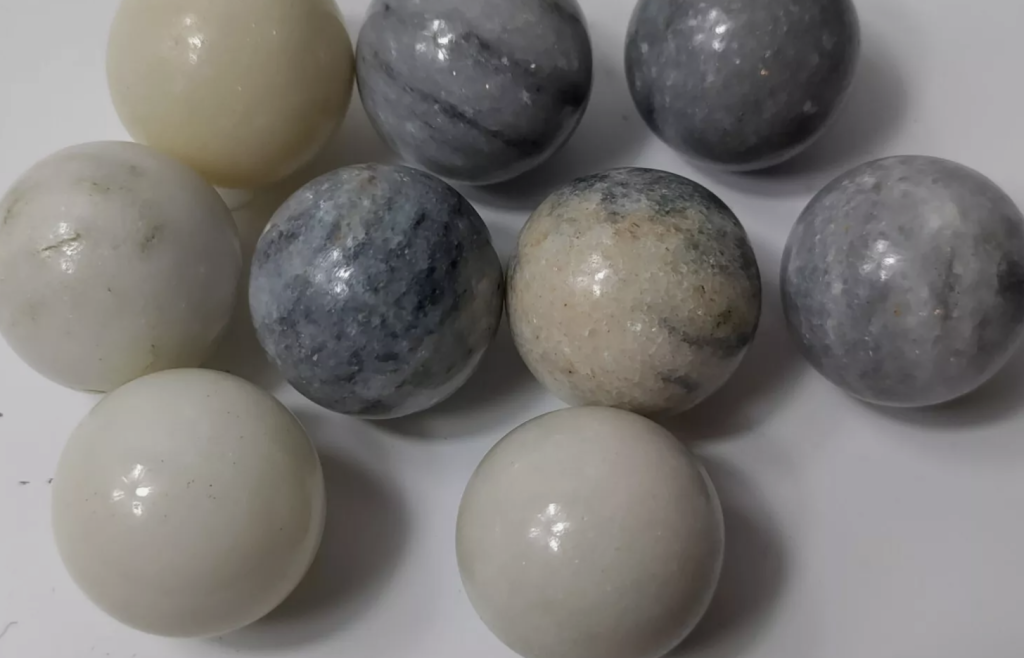
How to Spot Repolished Marbles: A UK Collector’s Guide
Why Repolishing Is a Serious Issue
Repolishing removes original surface material to improve appearance, often disguising damage. While visually appealing, repolishing fundamentally alters a marble’s historical integrity and usually reduces value in the UK market.
Why Repolished Marbles Are Common
Increased market prices
Simple polishing tools
Inexperienced buyers prioritising shine
Even reputable sellers may unknowingly offer repolished examples.
Key Signs of Repolishing
1. Surface Texture
Original antique marbles show subtle micro-wear. Repolished surfaces often appear:
Overly glossy
Uniformly smooth
Lacking age texture
2. Loss of Manufacturing Marks
Handmade marbles typically retain:
Pontil remnants
Shear marks
Their absence can indicate polishing.
3. Edge Softening
Chips ground out during polishing leave unnatural rounding.
4. UV Light Indicators
Repolished areas may fluoresce unevenly due to heat or compound residue.
5. Diameter Reduction
Measure suspicious marbles. Repolishing often reduces size subtly but measurably.
Commonly Repolished Categories
Sulphides
Onionskins
High-value German handmades
These categories demand extra scrutiny.
UK Market Attitudes Toward Repolishing
UK collectors are generally conservative:
Disclosure is expected
Undisclosed polishing damages reputation
Auction descriptions increasingly flag it
When Repolishing Might Be Tolerated
In rare cases:
Severely damaged low-value marbles
Clearly disclosed restoration
Even then, value rarely recovers.
Protecting Yourself as a Buyer
Ask direct questions
Request multiple lighting photos
Inspect in person when possible
The safest assumption is simple: if a marble looks too perfect for its age, investigate further. UK collectors who master repolishing detection avoid the most expensive mistakes in the hobby.