
The development of marble-making machines revolutionized the industry, transforming marble production from skilled handcraft to mechanized mass production. Understanding how these early machines worked provides insight into the marbles they produced and the technological innovations that created the American machine-made marble industry. This comprehensive guide explores the invention, mechanics, evolution, and impact of early marble-making machinery from the early 1900s.
Who Invented the First Marble Making Machine?
Martin Frederick Christensen, a Danish immigrant living in Akron, Ohio, developed and patented the first commercially successful marble-making machine around 1903. While others had attempted mechanical marble production before Christensen, his design achieved the breakthrough creating consistent, economical machine-made marbles.
Christensen brought expertise from European glassworking traditions combined with American industrial innovation sensibilities. His background in glass manufacturing provided understanding of glass behavior at various temperatures and conditions essential for successful marble production.
The timing of Christensen’s invention coincided with broader American industrial mechanization trends. The early 1900s saw numerous handicraft industries transitioning to machine production, and marbles represented another candidate for automation creating cheaper products accessible to mass markets.
Christensen’s original patents described mechanisms for continuously forming glass marbles from molten glass streams. The patent documents provide technical details about the machinery’s operation though actual surviving machines from this earliest period are exceptionally rare.
M.F. Christensen & Son Company, established around 1903 in Akron, Ohio, manufactured marbles using Christensen’s patented machines. The company operated until approximately 1917, demonstrating the machinery’s commercial viability and establishing machine-made marbles as legitimate industry.
How Did the Original Marble Machines Work?
Early marble-making machines employed ingenious mechanisms creating spherical glass objects from continuous glass streams.
The process began with molten glass from furnaces flowing through systems directing it toward forming mechanisms. Glass temperature required precise control—too hot and glass wouldn’t maintain shape during forming, too cool and glass became unworkable.
The forming mechanism used rotating shears or cutters severing glass streams into individual gobs. These shears operated at regular intervals cutting uniform glass portions that would become individual marbles. The timing and speed of cutting determined marble sizes with faster cutting creating smaller marbles.
After cutting, glass gobs entered forming devices using grooves, tracks, or spiral mechanisms. The most common approach employed grooved tracks arranged in spiral patterns. Glass gobs rolled down these spiraling grooves while glass remained plastic enough to deform.
The spiral motion combined with gravity caused glass gobs to assume spherical shapes. The rolling action while glass cooled created increasingly round forms. The groove depth and spiral angle affected how marbles formed and how round they became.
Pattern creation in early machines proved challenging since continuous glass streams created solid color marbles without the color variation possible in handmade pieces. Some early machines experimented with feeding multiple colored glass streams creating basic patterns, though these early attempts produced simpler patterns than handmade marbles.
Cooling occurred as marbles traveled through machinery, with final cooling sometimes happening in separate annealing ovens reducing internal glass stress. Proper cooling prevented cracking and created stable finished marbles.
The cutoff marks characteristic of machine-made marbles resulted from the shearing action cutting glass streams. The paired marks on opposite marble sides show where cutters severed the glass creating individual pieces.
What Problems Did Early Machines Face?
Early marble-making technology encountered numerous challenges requiring ongoing refinement and innovation.
Temperature control presented constant difficulties. Glass behavior changes dramatically with small temperature variations, making consistent production challenging. Too-hot glass flowed excessively while too-cool glass didn’t form properly.
Furnace technology in the early 1900s provided less precise temperature regulation than modern equipment. Operators developed skills adjusting glass temperatures through experience and observation rather than precise measurement.
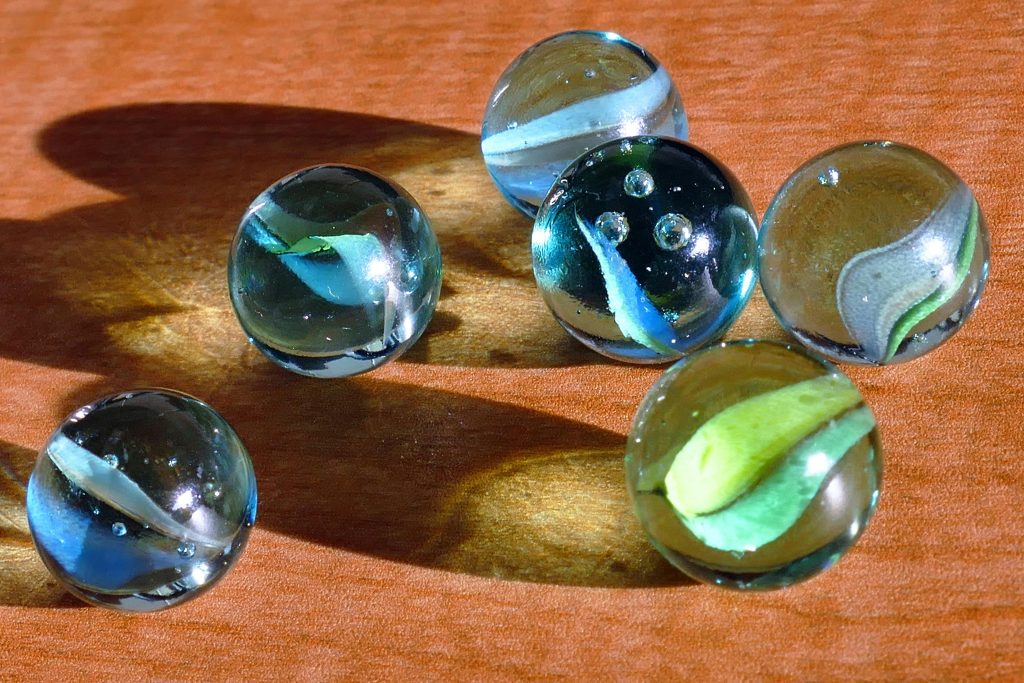
Pattern creation remained limited in early machines. While handmade marbles featured complex latticinio cores, swirls, and elaborate patterns, early machine-made marbles were primarily solid colors or very simple patterns. The continuous stream process made complex patterns extremely difficult.
Some manufacturers experimented with feeding multiple colored glass streams attempting to create patterns. However, achieving consistent attractive patterns proved challenging, often resulting in muddy or unappealing color mixing.
Marble roundness varied in early production. Achieving perfectly spherical marbles consistently required precise groove design, proper glass temperature, and optimal rolling time. Early machines sometimes produced irregular shapes requiring sorting to remove imperfect pieces.
Production speed versus quality trade-offs affected manufacturing decisions. Faster production reduced costs but potentially compromised marble roundness and consistency. Slower production improved quality but raised costs per marble.
Breakage and waste created significant losses. Glass gobs that didn’t form properly, marbles with cracks from cooling stress, and pieces with unacceptable irregularities all became waste requiring disposal. Early machines likely had higher waste rates than mature technology achieved.
How Did Marble Machine Technology Evolve?
Marble-making machinery improved substantially during the 1910s-1930s as manufacturers refined designs and techniques.
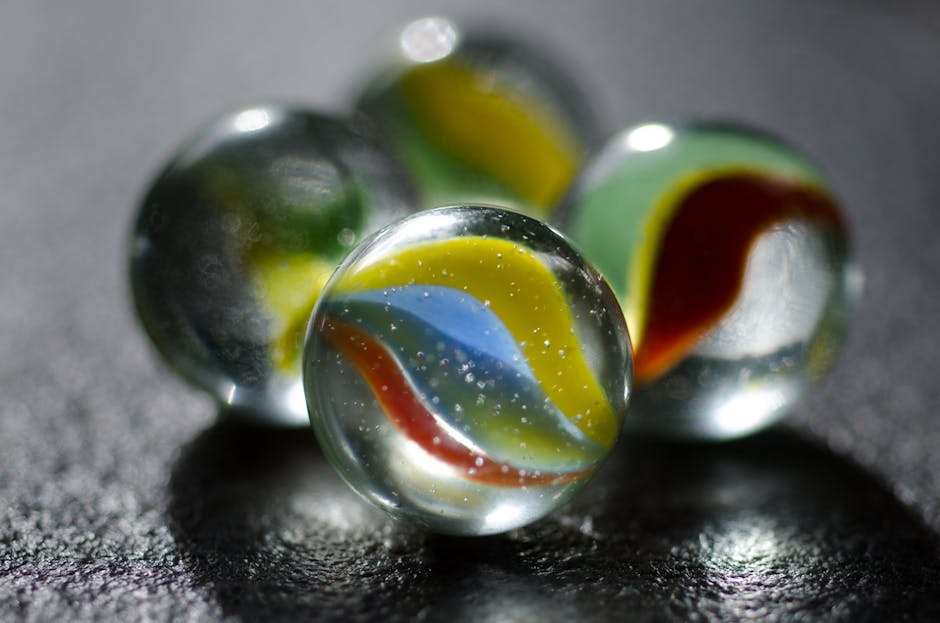
Pattern creation advanced allowing more complex designs. Manufacturers developed methods for introducing colored glass ribbons into clear glass streams creating corkscrews, patches, and other patterned types. These innovations closed the pattern gap somewhat between machine-made and handmade marbles.
The ribbon feed mechanisms allowed precise colored glass introduction at controlled rates and positions. Different ribbon placement and quantities created various pattern types, giving manufacturers product differentiation possibilities.
Forming mechanisms improved creating more consistently round marbles with better surface quality. Groove designs, spiral angles, and rolling distances were optimized through experience and experimentation.
Temperature control systems advanced with better furnace technology and developing measurement capabilities. More consistent glass temperatures improved production consistency and reduced waste.
Production speeds increased as machinery and processes refined. Early machines might have produced dozens of marbles per minute while improved machines reached hundreds per minute. This productivity increase drove costs down making marbles increasingly affordable.
Automation levels increased reducing manual intervention requirements. Early machines needed constant operator attention while improved designs ran more automatically with periodic supervision rather than continuous monitoring.
Different manufacturers developed proprietary machine variations creating distinctive construction characteristics. These variations sometimes help identify manufacturers of unmarked marbles based on construction details resulting from specific machinery.
What Impact Did Machines Have on the Marble Industry?
Mechanization transformed marble manufacturing economics, markets, and product characteristics.
Prices dropped dramatically making marbles accessible to broader populations. Handmade German marbles were relatively expensive limiting ownership to children from families affording such toys. Machine-made marbles cost fractions of handmade prices creating truly mass-market products.
The democratization of marble ownership changed childhood play culture. When marbles became cheap and abundant, marble games became universal childhood activities rather than limited to privileged children.
Production volumes increased exponentially. Where handmade production involved individual craftspeople making dozens of marbles daily, machines produced thousands or tens of thousands daily. This volume increase satisfied growing American markets while driving prices down.
Employment shifted from skilled glassworkers to machine operators. Handmade marble production required years of apprenticeship developing glassworking skills. Machine operation needed training but not the same level of craft expertise, changing labor markets and skills requirements.
German handmade marble imports declined as American machine-made production satisfied domestic markets. World War I disrupted German imports accelerating the shift to domestic American production. By the 1920s, American machine-made marbles dominated markets previously served by German handmade pieces.
Product characteristics changed as machine-made marbles differed from handmade pieces. The regularity, specific pattern types, and construction characteristics of machine-made marbles created distinct product categories rather than simply cheaper versions of handmade marbles.
What Companies Used Early Marble Machines?
Several manufacturers adopted early marble-making technology creating the American marble industry.
M.F. Christensen & Son Company pioneered using Christensen’s original machines. Their early production established machine-made marbles’ viability though the company’s relatively brief operation meant others would expand and dominate long-term industry development.
Akro Agate Company initially purchased Christensen machines but later developed their own machinery designs. The company’s long operation from approximately 1910-1951 meant they continuously refined equipment creating distinctive products across multiple decades.
The company’s proprietary machine developments created construction characteristics helping identify Akro Agate marbles. Pattern types like corkscrews reflected specific machinery capabilities and techniques the company developed.
Christensen Agate Company, founded by M.F. Christensen’s son and associates in 1925, developed advanced machinery creating distinctive patterns including slags and flames. Despite brief operation (1925-1933), their technological innovations influenced broader industry.
Peltier Glass Company developed machinery producing their characteristic National Line Rainbos and other patterns. The company’s long operation allowed continuous technological refinement creating evolving product lines.
How Are Original Marble Machines Preserved?
Few early marble-making machines survive, making those that do historically significant.
Museum collections occasionally include early marble machinery examples. The Smithsonian, regional history museums, and specialized glass museums sometimes preserve machines representing industrial heritage.
Private collectors occasionally own marble-making equipment though complete operational machines are exceptionally rare. Components, partial machines, or related equipment appear more commonly than complete functioning machines.
Photographic and documentary evidence preserved in company archives, patent drawings, and historical photographs provide visual records of early machines when physical examples don’t survive.
Modern demonstrations sometimes recreate marble-making using reproduction equipment built from historical descriptions and patent documents. These educational demonstrations help people understand processes creating marbles in their collections.
What Can We Learn from Marble Machine History?
Understanding early marble machinery provides insights extending beyond pure historical interest.
Authentication benefits from knowing construction characteristics resulting from specific machinery. Machine-made characteristics like cutoff marks, pattern limitations, and construction details reflect technological capabilities of different eras and manufacturers.
Collecting appreciation deepens when understanding challenges early manufacturers overcame. Recognizing that creating attractive patterned marbles mechanically required genuine innovation increases appreciation for early machine-made pieces.
Manufacturing heritage connects marbles to broader industrial history. Marble machines represent American industrial innovation during the early 20th century mechanization wave transforming numerous traditional crafts into modern industries.
The transition from hand to machine production in marbles mirrors transformations across many industries during this period. Studying marble manufacturing illuminates broader patterns in American industrial development.
Early marble-making machines revolutionized an industry, transformed childhood play, and created the collectible machine-made marbles we pursue today. Understanding these machines’ development and operation enriches our appreciation for the marbles they produced and the industrial heritage they represent.
Shopping Basket