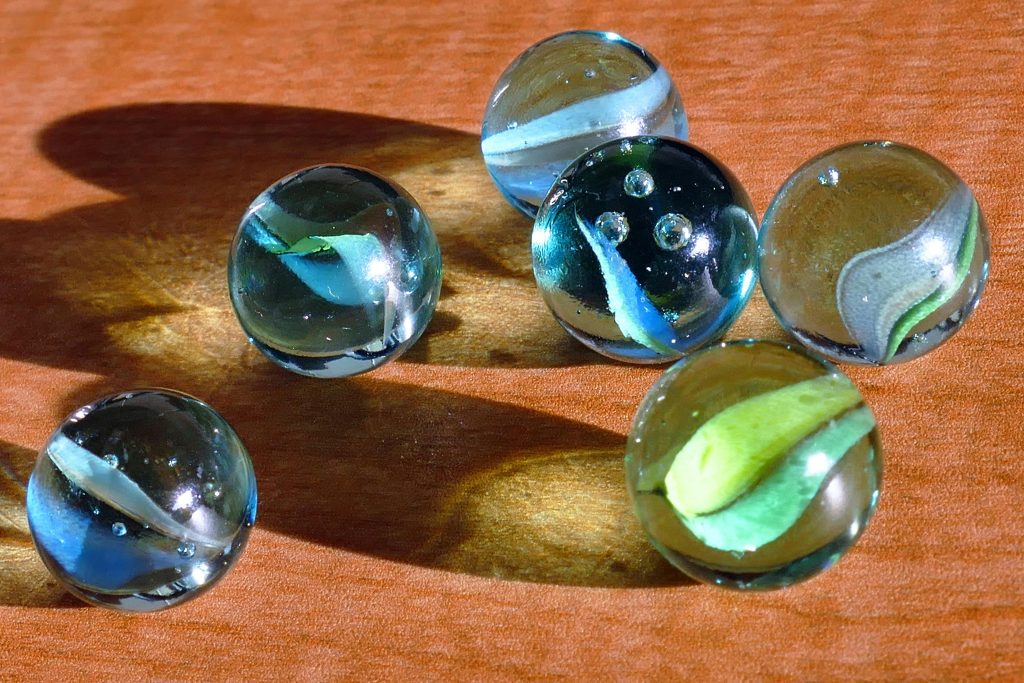
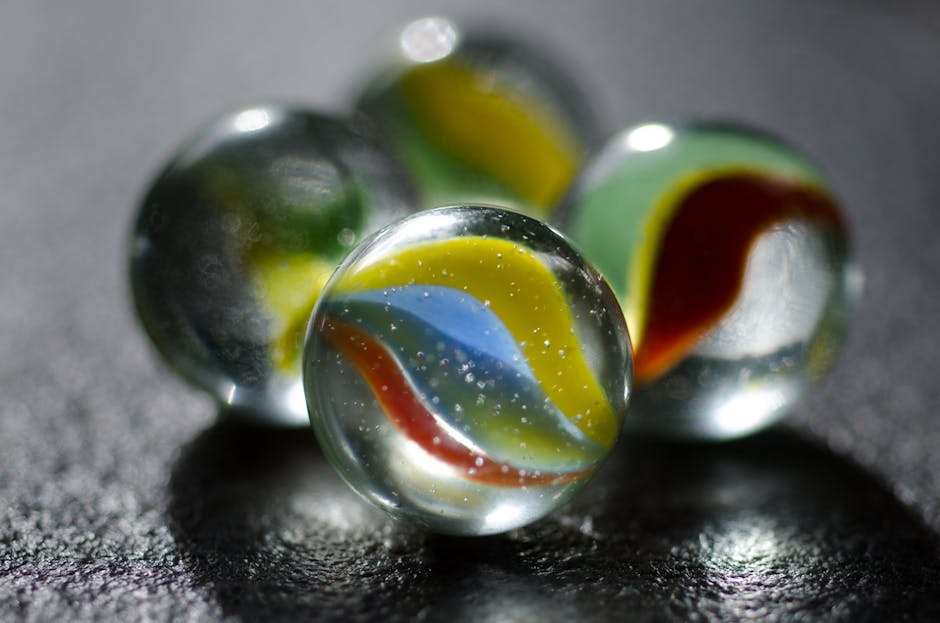
For collectors, historians, and enthusiasts, identifying machine-made marbles is a fundamental skill. While handmade marbles are prized for their individuality, machine-made marbles represent a pivotal era in industrial toy production. Understanding how automation shaped their physical characteristics allows collectors to distinguish manufacturers, production periods, and even specific machines. Seams, patterns, and manufacturing marks are the key visual clues that reveal a marble’s origin and method of manufacture.
Why Machine-Made Identification Matters
Machine-made marbles were produced in vast quantities from the early 20th century onward, primarily in the United States. Companies such as Akro Agate, Christensen Agate, Peltier Glass, Marble King, and Vitro Agate each used distinct machinery and production methods. These differences left identifiable marks on the marbles themselves.
Correct identification affects value, authenticity, and historical understanding. Early machine-made marbles are often collectible, while later mass-produced examples may be common. Knowing what to look for helps avoid misclassification and deepens appreciation of the manufacturing process.
Seams: The Most Important Identifier
Seams are the most defining feature of machine-made marbles. Unlike handmade marbles, which typically show pontil marks where the glass was cut from a rod, machine-made marbles often display seams created during automated forming.
A seam appears as a faint line or pair of lines where the glass streams met or where the marble was cut from the flow. These seams may be subtle or clearly visible, depending on the manufacturer and production era.
There are two primary seam types:
- Single seam: A continuous line that wraps around the marble, often associated with early machine-made methods.
- Double seams: Two parallel seams opposite each other, commonly seen on marbles formed by opposing rollers.
Seams may appear raised, indented, or blended into the surface. Their orientation and clarity can help identify both the manufacturer and approximate date.
Cut Marks and Shear Lines
Some machine-made marbles show cut marks or shear lines where molten glass was separated into individual pieces before rounding. These marks may appear as straight or slightly curved lines and are often confused with cracks by inexperienced collectors.
Cut marks are not flaws but evidence of automated production. On earlier machine-made marbles, these lines may be more pronounced due to less refined cutting mechanisms.
Pattern Consistency and Repetition
Machine-made marbles are defined by pattern consistency. Unlike handmade marbles, which feature irregular swirls and unpredictable internal structures, machine-made patterns are repeatable and controlled.
Common machine-made patterns include:
- Corkscrews: One or more spiraling color bands wrapping evenly around the marble.
- Patches: Solid areas of color applied to a clear or colored base.
- Flames: Sharp, pointed color streaks created by glass stream manipulation.
- Hybrids: Combinations of patches, ribbons, and corkscrew elements.
If multiple marbles display nearly identical patterns, sizes, and color placements, they are almost certainly machine-made.
Color Placement and Flow Direction
Machine-made marbles often reveal directional flow in their patterns. Colors tend to follow smooth, continuous paths, reflecting how glass streams moved through machinery. Ends of color ribbons may taper or terminate near seams, providing clues about how the marble was formed.
In contrast, handmade marbles frequently show abrupt color changes, uneven thickness, or asymmetrical internal designs due to manual shaping.
Surface Uniformity and Shape
Machine-made marbles are highly spherical and uniform in size. Advances in automation ensured consistency that handmade methods could not easily achieve. Deviations in shape are rare and usually minimal.
The surface of a machine-made marble is typically smooth and evenly polished. Minor surface flaws may exist, but pronounced irregularities are uncommon. Perfect roundness is a strong indicator of machine production.
Manufacturer-Specific Traits
Different companies left distinct signatures on their marbles:
- Akro Agate: Known for sharp corkscrews, bright colors, and visible seams.
- Christensen Agate: Early machine-made marbles with bold colors and subtle seams, often transitional in appearance.
- Peltier Glass: Recognized for vivid color combinations and patch or rainbo styles.
- Vitro Agate: Often features flame patterns with distinct color layering.
- Marble King: Generally seam-free or with very faint seams due to later production improvements.
Learning these traits takes time but allows advanced collectors to identify marbles with confidence.
Heat Rings and Cooling Marks
Some machine-made marbles display faint heat rings or subtle circular marks caused by cooling processes. These marks are usually shallow and smooth, not cracks. They reflect how marbles were reheated or annealed to strengthen the glass.
Heat rings can be mistaken for damage, but in context, they are valuable indicators of machine production methods.
Common Misidentification Pitfalls
One of the most common mistakes is confusing worn seams with cracks or assuming all seam-free marbles are handmade. Some later machine-made marbles have nearly invisible seams due to improved technology.
Another error is assuming bright colors automatically indicate machine-made origin. Some late handmade marbles also used vivid colors, though their patterns remain less uniform.
Practical Identification Tips
To accurately identify machine-made marbles:
- Examine the surface under good lighting and magnification.
- Rotate the marble slowly to detect seams or shear marks.
- Compare patterns across multiple marbles for consistency.
- Study known examples from reputable references or collections.
- Avoid relying on a single feature; use multiple indicators together.
Conclusion
Identifying machine-made marbles requires careful observation and an understanding of how automation shaped their physical characteristics. Seams, pattern repetition, color flow, and surface uniformity all tell the story of industrial production. By learning to recognize these features, collectors can confidently distinguish machine-made marbles from handmade examples and appreciate the technological innovation that transformed marble manufacturing. Each seam and pattern is not just a mark, but a historical signature of the machine-made revolution.