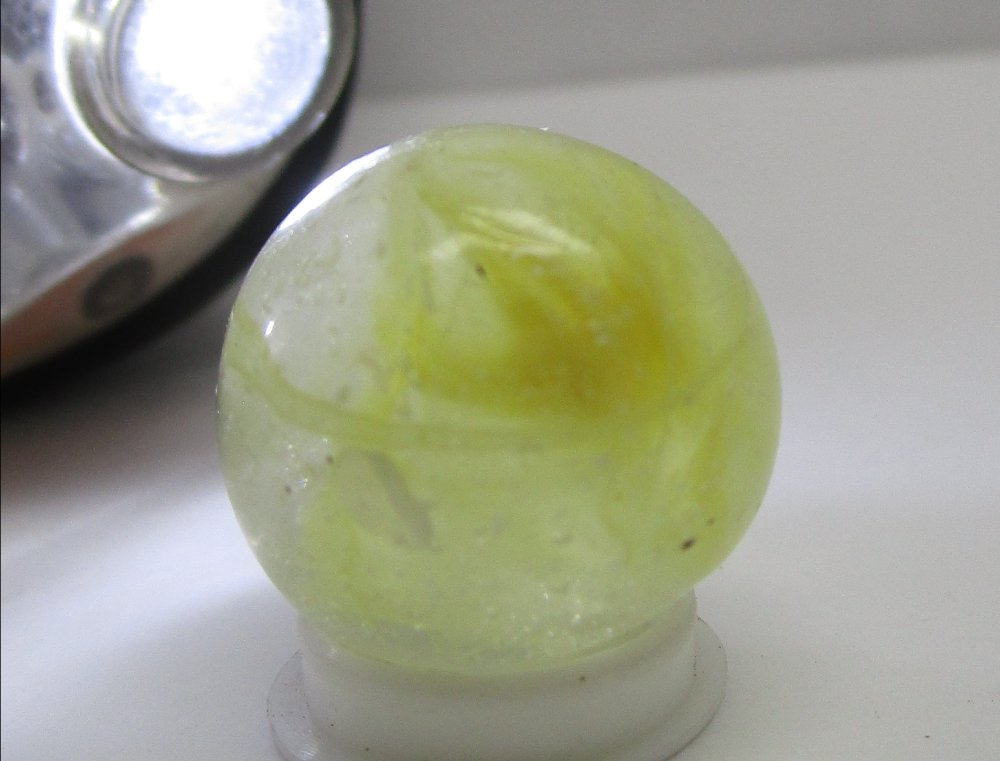
Marble Cleaning and Restoration: The UK Collector Debate
Why Cleaning Is So Controversial
Few topics divide marble collectors more than cleaning and restoration. At its core, the debate centres on one question: does intervention preserve history or destroy authenticity?
In the UK market, originality consistently commands a premium, even when condition is imperfect.
What Counts as Cleaning vs Restoration?
Acceptable Cleaning (Generally)
Distilled water rinse
Soft cloth wiping
Removal of loose dirt
Controversial Actions
Chemical soaking
Abrasive polishing
Heat treatment
Restoration (Value-Altering)
Chip removal
Crack filling
Surface grinding
Market Impact in the UK
UK buyers are typically more conservative than US counterparts. A lightly cleaned marble may be acceptable, but any form of polishing often reduces desirability.
Auction catalogues increasingly disclose:
“Repolished”
“Surface enhanced”
“Stabilised”
These descriptors usually suppress bidding.
The Ethics of Restoration
Arguments for restoration:
Structural preservation
Display improvement
Prevention of further damage
Arguments against restoration:
Loss of originality
Misrepresentation risk
Artificial inflation of value
When Cleaning Makes Sense
Cleaning may be justified when:
Dirt obscures identification
Biological residue threatens glass
Provenance is unaffected
Documentation Is Critical
Any cleaning or restoration should be documented, including:
Before and after photographs
Materials used
Date of intervention
Failure to disclose can create legal and reputational issues in the UK market.
UK Legal and Trading Considerations
Under UK consumer protection law, undisclosed restoration may constitute misrepresentation in commercial sales.
Final Thoughts
The safest rule for UK collectors is simple: when in doubt, do nothing. Original condition, even with flaws, almost always outperforms restored perfection over time.