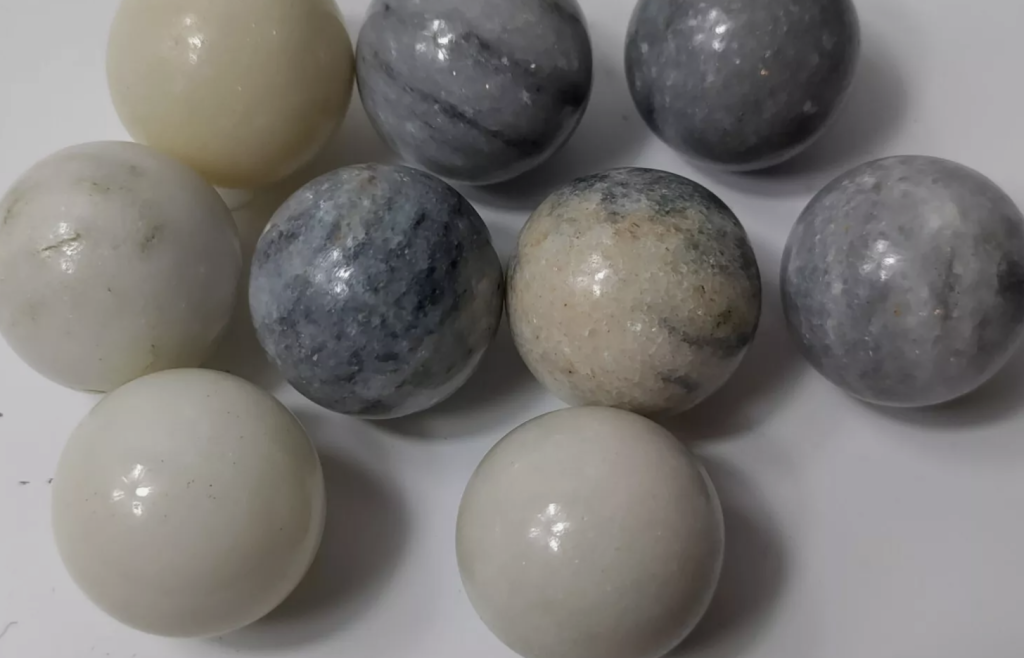
Clay and Ceramic Marbles: Collector’s Guide (UK Focus)
A Brief History of Clay Marbles
Clay marbles predate glass and were produced throughout Europe and Britain from the 18th century onward. They reflect early industrial play culture and are essential to understanding marble evolution.
Types of Clay and Ceramic Marbles
Plain Clay Marbles
Unglazed, earthy, and often asymmetrical. Highly common but historically important.
Glazed Ceramic Marbles
Often white or cream with coloured decoration. Includes early Benningtons.
Stoneware Benningtons
Salt-glazed with distinctive orange peel texture.
British vs American Production
British clay marbles tend to:
Be smaller
Have thinner glaze
Show softer firing marks
American examples are generally heavier and more uniform.
Identifying Authentic Examples
Look for:
Kiln firing marks
Uneven glaze pooling
Age-consistent wear
Perfect examples are rare and suspect.
UK Market Values
Common clay: £5–£20
British Benningtons: £30–£200
Exceptional examples: £500+
Collecting Strategy
UK collectors should:
Focus on glaze quality
Avoid repaired chips
Seek provenance when possible
Storage Considerations
Ceramic marbles are vulnerable to:
Chipping
Moisture damage
Use padded compartments.
Final Thoughts
Clay and ceramic marbles are foundational collectibles. For UK collectors, they offer affordable entry points into serious historical collecting.