The history of glass marbles is a story of craftsmanship, play, and industrial transformation. For centuries, marbles were made by hand, each one shaped by skilled glassworkers using traditional techniques passed down through generations. While these handmade marbles are admired today for their individuality and artistry, their dominance came to an abrupt end in the early 20th century. The introduction of machine-made production marked a revolution that permanently changed how glass marbles were manufactured, distributed, and perceived. Automation transformed marbles from small-scale craft objects into mass-produced toys, reshaping the industry forever.
Handmade Glass Marbles Before Automation
Before machine production, glass marbles were created entirely by hand. Skilled artisans gathered molten glass on rods, shaped it with scissors, and rolled it into spherical form. Many marbles retained pontil marks, slight asymmetry, and unique internal patterns that reflected the maker’s technique and timing.
Germany, particularly the Thuringian region, dominated handmade marble production throughout the 19th century. These marbles were exported worldwide and prized for their complex designs, including swirls, onionskins, latticinos, and core styles. However, handmade production was slow, labor-intensive, and limited in scale. Output depended on skilled labor, and consistency was difficult to maintain. As demand grew, these limitations became increasingly apparent.
The Need for Mechanization
By the late 19th century, global demand for toy marbles had increased dramatically. Growing urban populations, improved retail networks, and rising consumer spending created pressure for higher output and lower costs. Handmade production could not keep pace with this demand.
At the same time, industrial advances in glassmaking, including better furnaces, more consistent glass formulas, and improved temperature control, created the conditions needed for automation. Manufacturers began seeking ways to eliminate dependence on highly skilled artisans and replace manual shaping with machines capable of continuous production.
The Birth of the Marble Machine
The breakthrough came in the early 20th century with the invention of automated marble-making machines. These machines used streams of molten glass fed through mechanical rollers or molds that formed glass into spheres as it cooled. Instead of shaping individual marbles by hand, machines could produce hundreds or even thousands of marbles per hour.
The United States quickly became the center of this technological shift. Companies such as Akro Agate, Christensen Agate, Peltier Glass, and later Marble King pioneered and refined machine-made marble production. Their innovations effectively ended Europe’s dominance of the marble market and brought production firmly into the industrial age.
How Automation Changed Marble Design
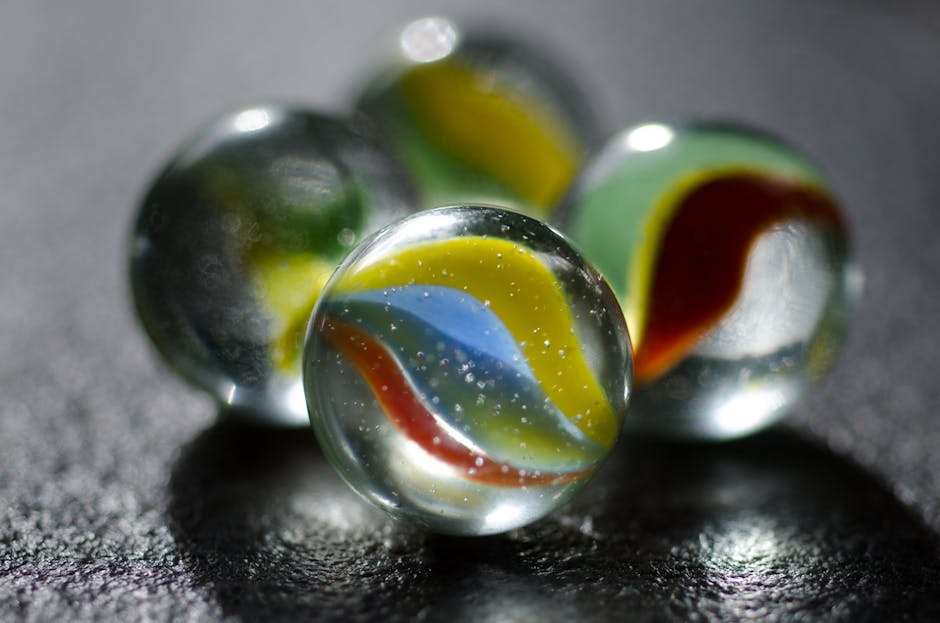
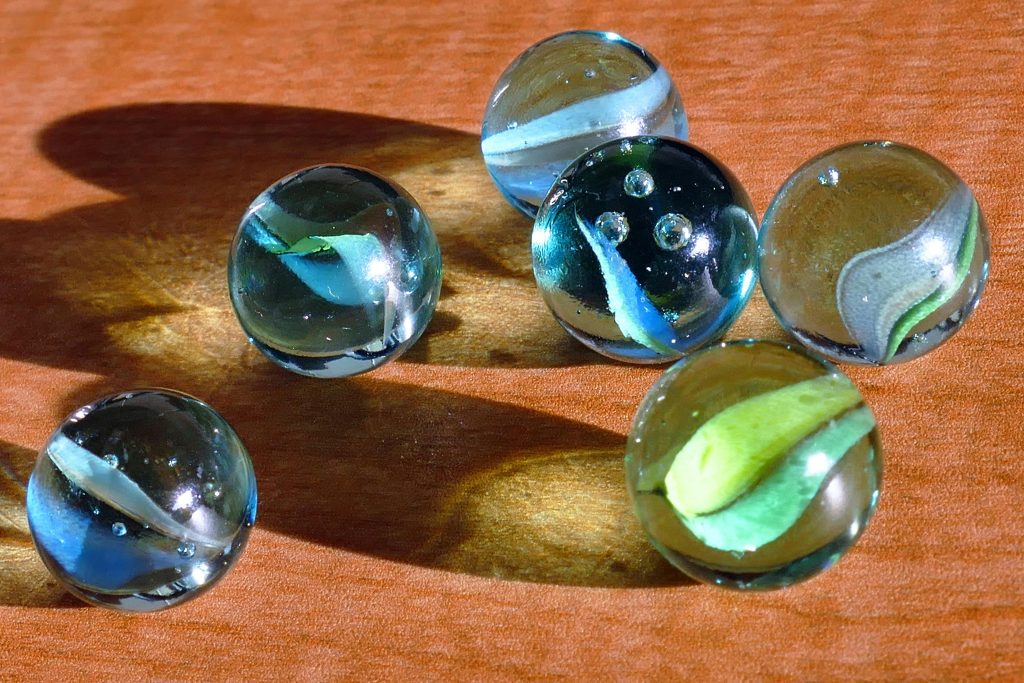
Machine-made production fundamentally altered the appearance of glass marbles. Unlike handmade marbles, machine-made examples lacked pontil marks and were highly uniform in size and shape. Patterns were created by controlled streams of colored glass rather than manual manipulation, resulting in consistent and repeatable designs.
This led to the development of new marble styles, including corkscrews, patches, flames, and hybrids. While these designs lacked the randomness of handmade marbles, they introduced bold colors and striking patterns that appealed to children and consumers. Consistency became a selling point rather than a drawback.
Mass Production and Market Expansion
Automation dramatically reduced production costs. Machine-made marbles could be sold in bulk at prices far lower than handmade equivalents. This affordability expanded the market and made marbles accessible to nearly every household.
Retailers could stock marbles reliably, schools and playgrounds embraced organized marble games, and marbles became one of the most common toys of the early to mid-20th century. Packaging evolved as well, with marbles sold in bags, boxes, and branded cartons, reinforcing their identity as mass-market consumer goods.
Impact on Labor and Craftsmanship
The rise of machine-made marbles had a profound impact on labor. Skilled glassworkers who once shaped marbles by hand were no longer essential to production. Instead, factories employed machine operators, maintenance workers, and quality inspectors.
While automation created new industrial jobs, it also effectively ended handmade marble production as a viable commercial practice. Traditional techniques survived only in small artistic studios and later as collector curiosities. The loss of craftsmanship became a defining feature of the machine-made revolution, sparking later nostalgia for handmade marbles.
Decline of European Marble Dominance
Automation shifted the balance of power in the global marble industry. German handmade marbles, once dominant, could not compete with the speed, consistency, and price of machine-made marbles produced in the United States. World War I further weakened European producers, accelerating the transition.
By the 1920s, machine-made marbles had largely replaced handmade imports in global markets. European marble workshops closed, while American factories expanded rapidly, setting new standards for production and distribution.
Long-Term Industry Effects
The machine-made revolution permanently redefined glass marble production. Standardization became the norm, and innovation focused on machinery, color chemistry, and pattern control rather than hand skill. Over time, production consolidated, with fewer companies producing marbles at increasingly large scales.
Even as marbles declined in everyday play during the late 20th century due to competition from new toys and digital entertainment, machine-made marbles continued to be produced efficiently, ensuring their survival as both toys and collectibles.
Legacy for Collectors and Historians
Today, the distinction between handmade and machine-made marbles is central to marble collecting. Handmade marbles are valued for their individuality and historical significance, while early machine-made marbles are prized for representing a pivotal technological shift.
Collectors study machine-made marbles to identify manufacturers, production periods, and pattern variations, highlighting the complexity and innovation behind automated production. The machine-made revolution is now seen not as the end of marble history, but as a critical chapter in its evolution.
Conclusion
Automation changed glass marble production forever. The machine-made revolution transformed marbles from handcrafted objects into mass-produced toys, reshaped global markets, and ended centuries of traditional craftsmanship. While handmade marbles remain treasured artifacts of the past, machine-made marbles tell a powerful story of industrial innovation, efficiency, and change. Together, they reflect how even the smallest objects can reveal the sweeping impact of automation on everyday life.