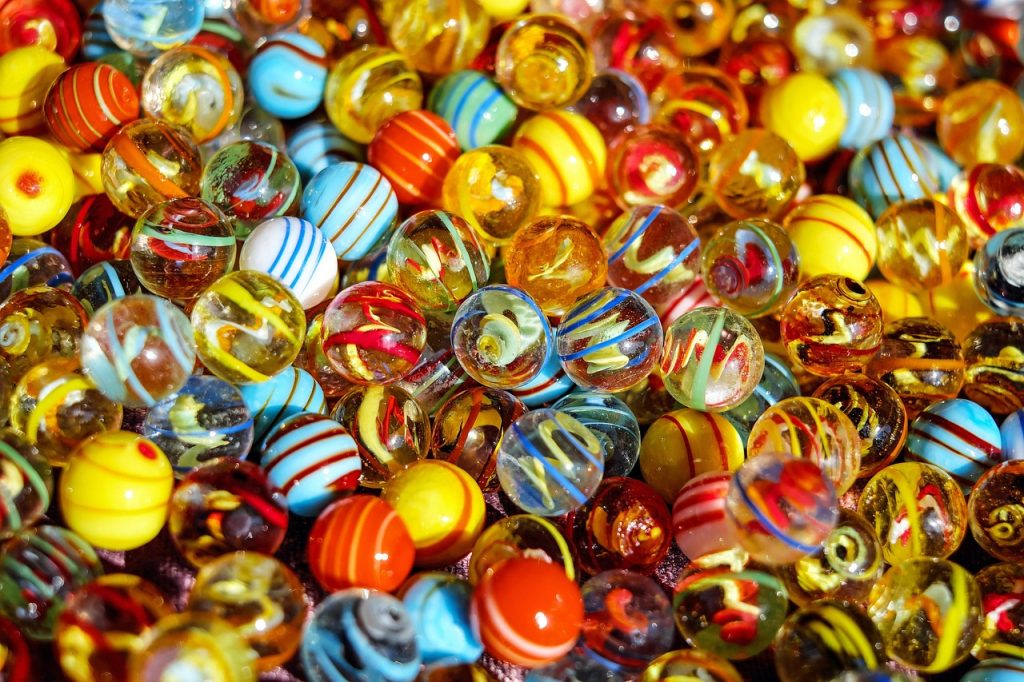
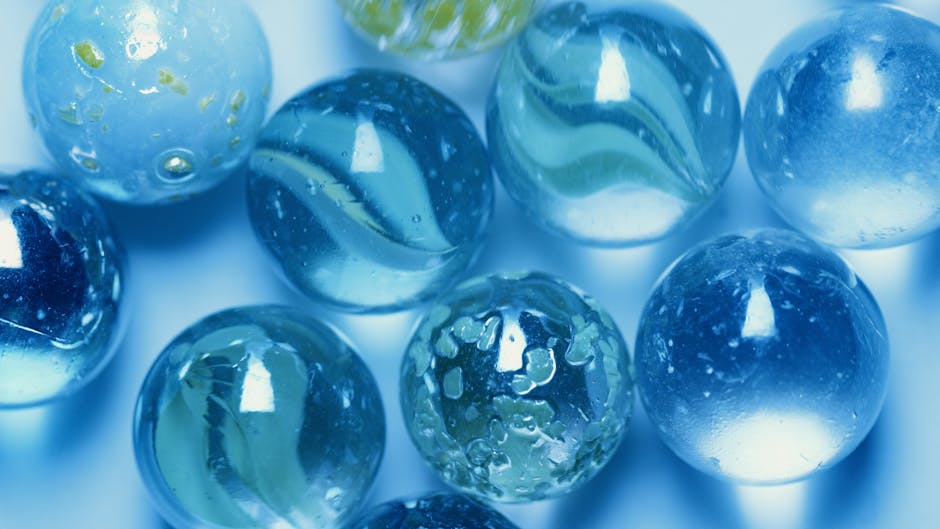
he Victorian era, spanning from 1837 to 1901 during the reign of Queen Victoria, was a period of significant social, industrial, and cultural transformation. Among the many developments that shaped childhood experiences during this time, one seemingly simple toy—the marble—emerged as a phenomenon. Known for their beauty, simplicity, and versatility, marbles captured the imagination of children and adults alike. This period, often referred to by collectors as the time of “marble mania,” laid the foundations for mass production of marbles and transformed a humble toy into a booming industry.
The Rise of Marble Play in Victorian England
Marbles have been played with for centuries, but during the Victorian era, they became widely popular in Europe and North America. Social, economic, and educational changes contributed to this craze:
- Urbanization and Play: The Industrial Revolution led to increased urban populations. Victorian children had access to communal streets, parks, and playgrounds where group games became common. Marbles, small and portable, were perfect for urban play.
- Education and Morality: Victorian society emphasized structured play as a means of teaching morality, patience, and skill. Marble games like “Ring Taw” or “Keepsies” encouraged fairness, dexterity, and strategy.
- Economic Accessibility: By the mid-1800s, improvements in glassmaking and clay molding allowed marbles to be produced at a lower cost, making them accessible to children from middle- and working-class families.
The popularity of marbles in Victorian England was so widespread that entire social groups of children were organized around marble games, tournaments, and local competitions. It was common to see children trading, collecting, and playing with marbles as a form of both recreation and social interaction.
Victorian Marble Types and Materials
Marbles of the Victorian era were made from various materials, reflecting both craftsmanship and affordability:
- Clay Marbles
- Early Victorian marbles were often made of clay, molded and baked to achieve durability.
- Colors were muted, usually brown, grey, or reddish, and the marbles were heavier than glass versions.
- Clay marbles were inexpensive, often made in large batches for mass distribution.
- Stone Marbles
- Less common than clay, these were polished river stones selected for size and smoothness.
- Stone marbles were valued for their natural patterns and weight, often used as shooters in games.
- Glass Marbles
- Glass production innovations in the 19th century, especially in Germany, allowed for more decorative marbles.
- Handmade glass marbles featured swirls, ribbons, or onionskin patterns. German marbles became highly sought after in Victorian England for their artistry.
- Glass marbles were both playthings and collectible items, bridging the gap between functional toys and miniature works of art.
- Other Materials
- Rare marbles were occasionally made from metals, agates, or polished minerals. These were typically luxury items for the upper classes.
Games That Fueled Marble Mania
The Victorian fascination with marbles was driven largely by the variety and simplicity of marble games:
- Ring Taw: The most common game, where players flick marbles to knock others out of a drawn circle. Skill and strategy were prized.
- Keepsies: A gambling-style game where marbles won could be kept permanently, teaching children careful play and competitive skill.
- Ringer: Similar to Ring Taw but often played on larger boards or streets, allowing for more players and complex tactics.
- Collars and Alley: Games that required precision and hand-eye coordination, often played in schoolyards or alleys.
These games did more than entertain. They fostered social interaction, rivalry, and skill-building, which in turn created demand for more marbles. Children wanted colorful, unique, and high-quality marbles to show off skill and impress peers.
How Victorian Marble Mania Drove Mass Production
The high demand for marbles during the Victorian era coincided with the Industrial Revolution, creating a perfect environment for mass production.
- German Craftsmanship and Export
- German marble makers, especially in Idar-Oberstein, perfected the art of handmade glass marbles with distinctive swirls and ribbons.
- By the mid-19th century, Germany became the primary exporter of marbles to England, America, and other European countries.
- Families and children developed preferences for German glass marbles due to their vibrant colors and unique designs.
- Mechanization of Marble Production
- Towards the late 1800s, machinery began to replace some manual processes. Machines could produce perfectly round marbles quickly, reducing costs while maintaining aesthetic appeal.
- Roller machines and automated molds enabled larger factories to meet growing demand, particularly for clay and glass marbles.
- Mass Marketing and Accessibility
- Department stores, toy shops, and street vendors capitalized on marble popularity, selling them in bulk or in decorative sets.
- Marbles became an affordable luxury, with more elaborate glass marbles costing a few pence and standard clay marbles available for a fraction of the price.
The combination of high demand, technological innovation, and marketing made marbles one of the first toys to benefit from mass production on a large scale.
The Cultural Significance of Victorian Marbles
Marbles were more than toys; they were a cultural phenomenon.
- Childhood Identity: Children often developed “marble collections,” showcasing rare or particularly attractive pieces. Ownership of distinctive marbles could confer status within peer groups.
- International Trade: The import of German marbles created early examples of globalized toy markets, influencing design preferences and production methods in England and America.
- Educational Value: Teachers and parents often encouraged marble games for their benefits in teaching dexterity, mathematics, and strategy.
Victorian marble mania also intersected with other societal trends, including the growth of leisure culture and the celebration of childhood as a distinct stage of life. Toys became a way to express creativity, skill, and social bonds, with marbles leading the way.
Collecting Victorian Marbles Today
Modern collectors prize Victorian marbles for their historical significance, craftsmanship, and rarity.
- Clay Marbles: Commonly found in estate sales, these are valued for historical authenticity rather than aesthetic appeal.
- Stone Marbles: Polished agates or river stones are sought after by collectors who appreciate natural variation.
- German Handmade Glass Marbles: These are the most collectible. Unique swirls, onionskin patterns, and intact pontil marks can command premium prices.
- Provenance and Condition: Marbles with original packaging, detailed provenance, or particularly rare designs are especially valuable.
Collectors today often focus on pattern identification, age verification, and material analysis, relying on reference guides and community knowledge to distinguish Victorian-era pieces from later reproductions.
Legacy of Victorian Marble Mania
The Victorian era set the stage for marble collecting as we know it today. The demand for marbles during this period:
- Stimulated industrial innovation in glass and clay production.
- Created international trade networks for toys and decorative objects.
- Established cultural traditions of play and competition that persist in modern marble games.
Marbles from this period are not just toys; they are tangible connections to Victorian childhood, industrial history, and global craft traditions. They serve as a reminder that even small objects—like a glass sphere or clay bead—can carry immense cultural, economic, and artistic significance.
Conclusion
The Victorian era was truly a golden time for marble enthusiasts. Children’s games drove the growth of the marble industry, pushing manufacturers to innovate and scale production to meet unprecedented demand. From clay and stone to intricate German glass marbles, this period transformed a simple pastime into a booming business and an enduring collectible hobby. Today, Victorian marbles remain cherished for their artistry, historical importance, and the glimpse they provide into a bygone era of childhood play.