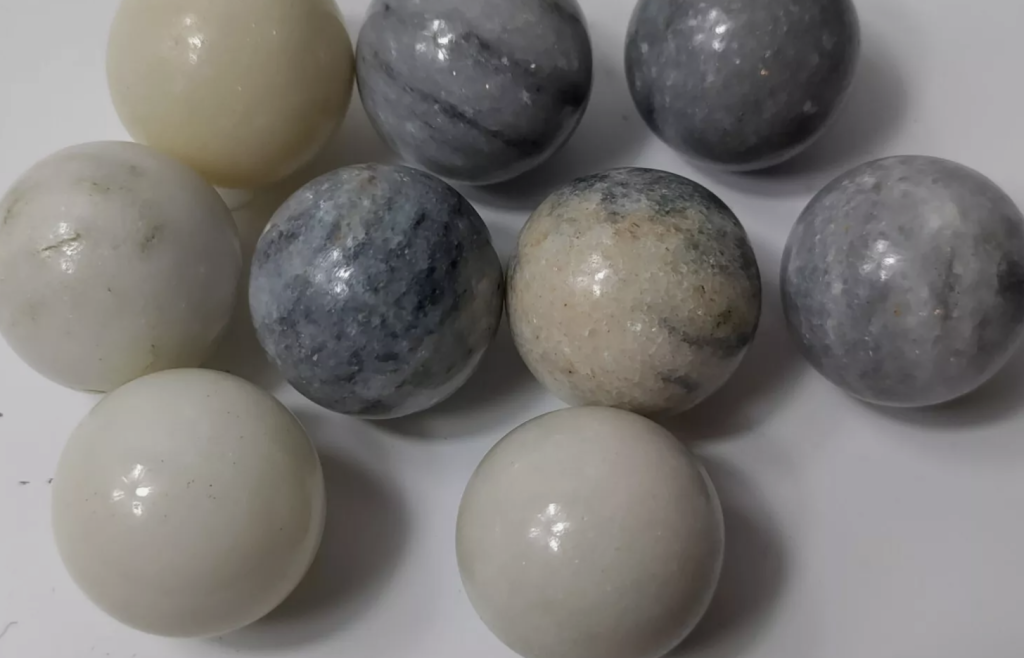

Common Misidentifications: Marbles Often Confused with Each Other
Marbles are more than just childhood toys; they are collectible objects, miniature works of art, and historical artifacts. Over centuries, marble makers across Europe, America, and Asia produced thousands of variations in glass, color, pattern, and size. With such diversity, it is no surprise that misidentification is a common issue, especially among casual collectors or those new to the hobby. Misidentifying marbles can affect both collectible value and historical understanding. This guide explores the most frequently confused types of marbles, how to differentiate them, and why proper identification is important.
1. Why Misidentification Happens
Several factors contribute to confusion among marble types:
- Similar Appearance: Many marbles share basic characteristics such as size, base color, or swirl patterns.
- Age and Wear: Older marbles may be faded, chipped, or scratched, obscuring original features.
- Terminology Variations: Regional names for marbles differ; a “latticino” in Italy may be called a “lattice” marble elsewhere.
- Modern Replicas: New marbles are often made to resemble vintage designs, confusing collectors.
Understanding these factors is the first step toward accurate identification.
2. Marbles Commonly Confused
Here are the main categories of marbles that are often misidentified:
A. Mica Marbles vs. Latticino Marbles
- Mica Marbles:
- Contain reflective mineral flakes embedded in glass.
- Sparkle under light due to mica flakes.
- Usually smooth and often vintage from early 20th-century Germany or the U.S.
- Latticino Marbles:
- Feature twisted threads of white or colored glass (called “lattices”) inside clear glass.
- Create linear or spiral patterns, not sparkling flakes.
- Originated in Italy in the 19th century, later made in Germany.
Common Confusion: Both types can be small, translucent, and colorful. A cursory glance may mistake mica’s shimmer for the delicate threads of latticino, but careful inspection reveals the difference in pattern: flakes versus threads.
B. Swirl Marbles vs. Onionskin Marbles
- Swirl Marbles:
- Swirled patterns are embedded within the glass.
- Colors are smooth and flowing, often two or more hues blended together.
- Typically round and evenly polished.
- Onionskin Marbles:
- Layers of color resemble the skins of an onion, usually in thin rings or bands.
- Often softer in appearance and sometimes less uniform.
- Can be translucent or opaque, usually vintage.
Common Confusion: Both have layered color effects, but swirls create flowing, spiral patterns, whereas onionskin marbles feature stacked concentric rings. This distinction is subtle but important for collectors.
C. Agate Marbles vs. Cat’s Eye Marbles
- Agate Marbles:
- Made from natural agate stone or glass designed to mimic agate.
- Opaque or semi-translucent with swirling, streaky color patterns.
- Often heavier due to stone content.
- Cat’s Eye Marbles:
- Glass marbles with colored core rods embedded to resemble a cat’s eye.
- Transparent or semi-transparent outer layer; core appears like a streak or eye.
- Typically smaller and more uniform than agate marbles.
Common Confusion: Both marbles have central color features and can appear similar in size. Agates are more irregular, often with muted tones, while cat’s eyes have a distinctive rod-like streak.
D. Sulphide Marbles vs. Sulphide-Inspired Modern Marbles
- Sulphide Marbles:
- Feature a small ceramic or porcelain figure embedded inside clear glass.
- Originated in Europe, especially Germany and Italy, during the late 19th century.
- Often collectible due to delicate miniature designs.
- Modern Sulphide-Inspired Marbles:
- Produced in China or the U.S. for decorative or novelty purposes.
- Sometimes the figure is plastic or less detailed.
- Mass-produced, generally lacking the subtle imperfections of vintage sulphides.
Common Confusion: New marbles may look similar but lack the craftsmanship and weight of vintage pieces. Close inspection of material, detail, and wear is necessary to verify authenticity.
E. Handmade vs. Machine-Made Marbles
- Handmade Marbles:
- Slight asymmetry, air bubbles, and irregularities are normal.
- Often have pontil marks (small scar where glass rod was broken) on the base.
- Produced until the 1920s primarily by artisans.
- Machine-Made Marbles:
- Perfectly spherical with uniform patterns.
- Mass-produced after the 1920s by machines like the Christensen & Sons marble press.
- Typically lack the small imperfections that add character to handmade marbles.
Common Confusion: Collectors may misidentify early machine-made marbles as handmade, especially when polished or cleaned. Checking for pontil marks and symmetry helps differentiate them.
F. Modern Reproductions vs. Vintage Originals
Modern reproductions of vintage marbles are increasingly realistic. These include swirls, cat’s eyes, and mica marbles, sometimes made with old techniques. Misidentification can occur when:
- Age is assumed based on color and pattern alone.
- Condition is mistaken; polished modern pieces can appear vintage.
- Weight and density differences are overlooked.
Tip: Vintage marbles usually show minor wear, slight color fading, or imperfections absent in new reproductions.
3. Tips for Correct Identification
Accurate marble identification relies on observation, research, and experience:
- Examine the Surface: Look for pontil marks, scratches, or polish wear.
- Inspect Patterns Carefully: Distinguish between flakes, threads, swirls, and cores.
- Check Weight and Material: Stone-based or heavy glass often indicates older, authentic marbles.
- Research Provenance: Know where the marble originated; German, Italian, and American marbles have distinct styles.
- Compare to Reference Guides: Books and online databases provide images and historical context for comparison.
4. Why Accurate Identification Matters
Correctly identifying marbles is important for several reasons:
- Collectible Value: Misidentified marbles may be undervalued or overvalued. A rare vintage sulphide can fetch hundreds, while a modern reproduction may be worth only a few dollars.
- Historical Appreciation: Understanding the origin, period, and maker of a marble enriches knowledge of the craft and culture.
- Preservation Practices: Different types of marbles may require specific care; for example, vintage mica or sulphide marbles should not be exposed to harsh sunlight or cleaning chemicals.
- Trading and Selling: Accurate identification ensures fair and transparent transactions among collectors.
5. Common Resources for Verification
Collectors often rely on reference materials, including:
- Books: “The Complete Book of Marbles” and “Marbles: Identification & Price Guide” provide detailed classifications.
- Online Databases: Sites dedicated to antique and collectible marbles offer photos, descriptions, and auction histories.
- Collector Communities: Forums, social media groups, and clubs provide peer verification and discussion.
- Museums and Exhibitions: Historical displays can help collectors compare their pieces to verified examples.
6. Conclusion
Marbles are deceptively simple objects that contain a wealth of history, craftsmanship, and aesthetic variation. Misidentifications are common due to the wide variety of types, overlapping characteristics, and modern reproductions. By learning to differentiate marbles such as mica vs. latticino, swirl vs. onionskin, or handmade vs. machine-made, collectors and enthusiasts can preserve historical accuracy, appreciate artistic nuance, and ensure collectible value.
Whether you are a casual enthusiast or a serious collector, careful observation, reference research, and experience are key to correctly identifying marbles. In the world of miniature glass and stone spheres, the details—sparkle, swirl, weight, and imperfection—make all the difference. Understanding these subtleties transforms collecting from a simple hobby into an informed exploration of history, art, and play.