
Thuringia (Germany) and Bohemia (Czech Republic) represent two historic European glassmaking regions that helped cement Europe’s reputation for quality glass goods, including marbles and decorative glass items. Understanding the scale, employment, and export history of these regions provides insight into how European glassmaking dominated global markets for centuries.
Thuringia (Germany) — Industrial & Marble Production
Glassmaking Hubs & Employment
Towns like Lauscha in Thuringia were central to glass and toy production, including early handmade marbles. The region has had glassmaking traditions spanning over 400 years with crafts passed down through generations.
In the 1980s, the Technical Glass Combine in nearby Ilmenau had a workforce of ~12,600 employees across ~30 companies, with about 5,000 employees at Ilmenau alone, showing how widespread glass manufacturing (including marbles and related products) was in the region at that time.
Glass & Marble Companies
While specific marble companies with detailed historic employment data are harder to enumerate, several types of enterprises existed historically and today:
Farbglashütte Lauscha GmbH — A traditional Thuringian glassworks producing colored glass, rods, tubes, and glass ornaments—including glass marbles and decorative items. The company has ~165 years of glassmaking tradition and is a mid-sized firm that builds on the region’s historic glass culture.
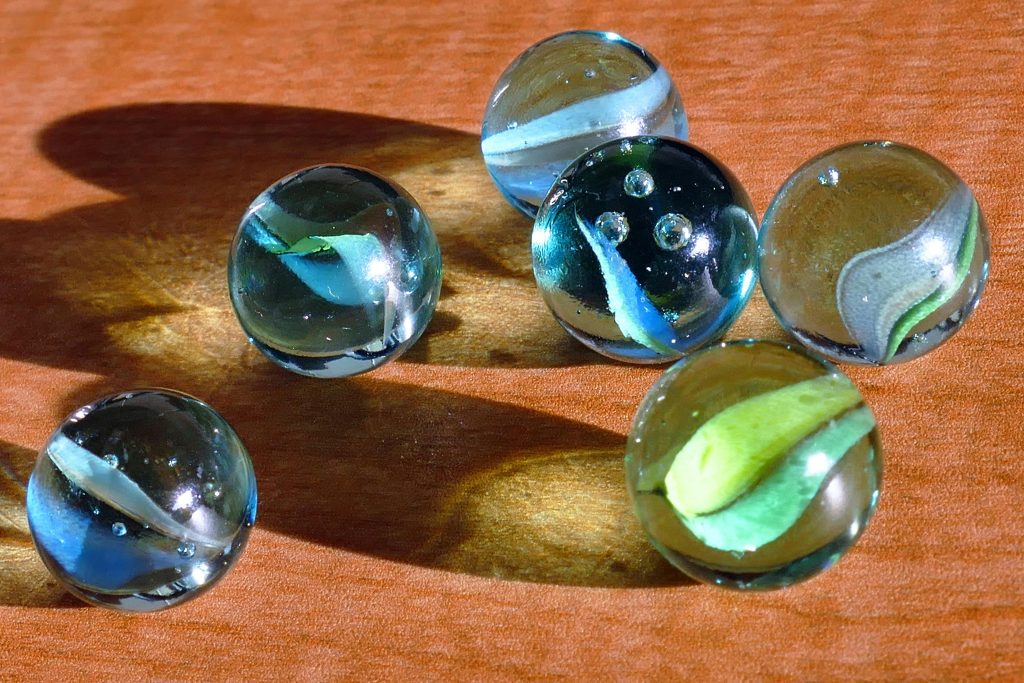
Numerous Glassworks in Lauscha — By the mid-19th century, multiple factories were established producing marbles, beads, and toys; marbles became particularly popular after the 1840s when innovations in torch and lamp-based glass shaping spread locally.
Exports & Trade
Modern export data shows Germany’s marble glass exports (as a category) involved ~119 export shipments from a roster of about 35 German exporters to around 37 global buyers—as of 2025 records. Top destinations included Kazakhstan, the United States, and Vietnam.
Overall glass and ornamental exports historically came from Thuringia and nearby regions to England, the U.S., and other markets, especially when handmade glass ornaments and marbles were sold as novelty and collector items in the late 19th and early 20th century.
Employment Takeaway (Thuringian glass tradition):
While precise counts of glass/skilled worker employment tied just to marbles aren’t preserved, the region’s glass industry historically employed thousands of artisans, and at industrial peaks included 10,000+ workers in combined glass production enterprises.
Bohemia & Czech Lands — Glass Manufacturing Powerhouse
Industry Scale & Employment
The broader Czech glass and ceramics sector is still highly significant:
In recent economic surveys, the glass and ceramics industry in the Czech Republic employed over ~20,000 people across more than 100 companies. 80–90% of this production is exported abroad, indicating strong global demand.
This employment includes flat glass, technical glass, decorative items, and luxury crystal—not specific marbles, but the infrastructure that historically also produced glass beads, rods, and components useful for marble production or related craft.
Major Companies & Historical Producers
Bohemia (the heartland of Czech glass) was home to historic companies that helped define fine glass art and export markets:
Crystal BOHEMIA a.s. — A modern successor to traditional Bohemian glass producers and one of the world’s largest producers of lead and lead-free crystal glass.
Moser (Karlovy Vary) — Founded in 1857, a prestigious luxury glass producer known globally for high-end decorative glass. At its peak, it employed hundreds and exported worldwide.
Preciosa (Jablonec nad Nisou) — A major Czech crystal brand (over 3,000 employees as of 2010) with a long history rooted in 16th-century glassmaking traditions.
Rückl Crystal (Nižbor Glassworks) — Established in 1903, known for hand-cut crystal glass exported to markets including the U.S., Japan, and Russia.
Crystalex — One of the largest Czech glass producers, historically formed by merging multiple glassworks, with significant turnover and employment historically tied to the Nový Bor region.
Exports & Global Reach
Bohemian glass has been exported internationally since at least the 17th century, prized for craftsmanship comparable to Venetian glass. Exports historically reached aristocratic courts across Europe, including France, Austria, Russia, and later global markets.
Today’s Czech glass industry exports 80–90% of its output abroad, largely to EU countries and beyond, demonstrating that the tradition of export-oriented glass production remains strong.
Connection to Marbles and Small Glass Goods
Bohemia’s glass tradition didn’t focus historically on marbles per se but on crystalware, beads, and artistic glass items—components that influenced broader glass craftsmanship. Czech glass beads and rods have been integral raw materials in various forms of glass art, including toy production, and reflect a strong regional glassmaking culture.
Summary Points
Thuringia’s glass towns like Lauscha supported thousands of artisans over centuries and had hundreds (if not thousands) of workers across multiple glass production sites, some of which produced marbles and related toys.
German exports of marble glass still happen today (tens to low-hundreds of shipments annually), though global industrial production now centers in other regions.
Bohemia & Czech glass makers employ over 20,000 people in glass and ceramics today, with major brands historically exporting high-quality glass worldwide.
Major historic glass companies like Moser, Preciosa, Riedl, and Crystalex exemplify the region’s contribution to global glass markets—showing a tradition of craftsmanship and export that helped European glass dominate world markets for centuries.
Shopping Basket