
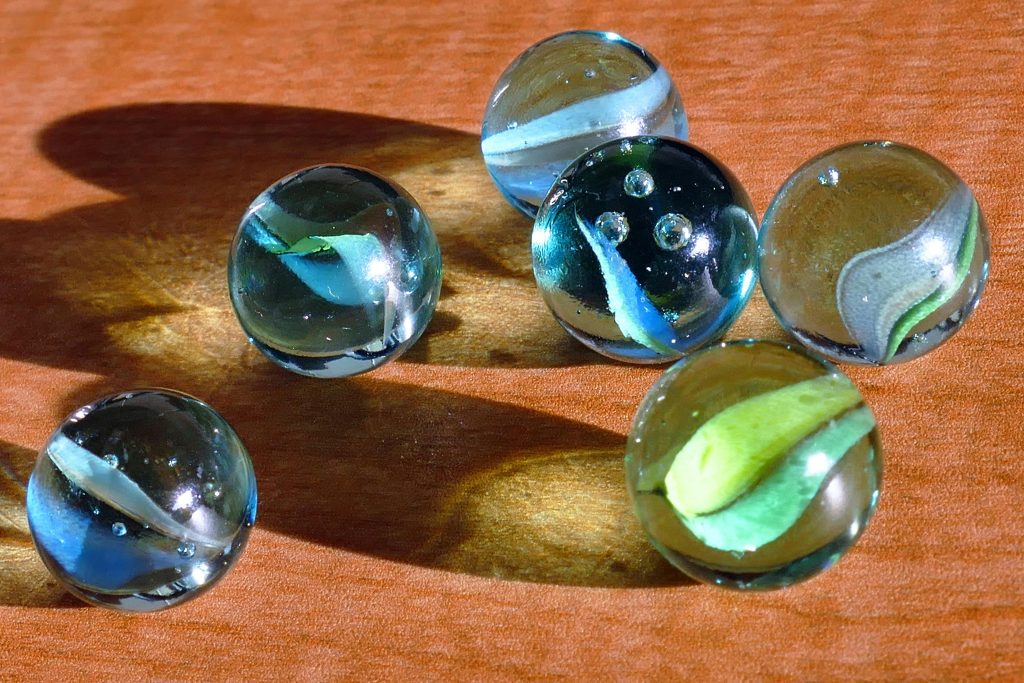
Lutz Marbles: The Goldstone Magic That Makes These Sparkle
The world of vintage marble collecting holds many treasures, but few captivate collectors quite like Lutz marbles. These extraordinary glass spheres shimmer and sparkle with an almost magical quality, catching light in ways that make them stand out in any collection. Named after Nicholas Lutz, a master glassmaker who worked at the Boston and Sandwich Glass Company in Massachusetts during the late 19th century, these marbles represent a pinnacle of glassmaking artistry that continues to mesmerize collectors more than a century after their creation.
The Alchemy of Goldstone Glass
The secret behind the distinctive sparkle of Lutz marbles lies in a special ingredient: goldstone glass, also known as aventurine glass. This type of glass contains tiny flecks of metallic copper that create brilliant, glittering reflections when light hits the marble’s surface. The effect is nothing short of spectacular, transforming what might be an ordinary swirl marble into a dazzling work of art that seems to contain captured starlight.
The creation of goldstone glass itself is a fascinating process steeped in glassmaking tradition. Contrary to what the name might suggest, goldstone doesn’t actually contain gold. Instead, glassmakers add copper compounds to molten glass under carefully controlled conditions. The copper must be heated to precise temperatures in a reducing atmosphere, meaning an environment with limited oxygen. As the glass cools, the copper crystallizes into tiny, flat hexagonal or triangular platelets suspended throughout the glass matrix. These microscopic copper crystals are what create the characteristic sparkle, reflecting light in multiple directions to produce that coveted glittering effect.
Nicholas Lutz: The Master Behind the Magic
While Nicholas Lutz didn’t invent goldstone glass—the technique dates back to 17th century Venice—he perfected its use in marble making and popularized it among American glassmakers. Lutz was a French immigrant who brought European glassmaking expertise to America, working at the Boston and Sandwich Glass Company from approximately 1869 to 1888. His skill with complex glass techniques elevated marble making from a simple craft to an art form.
Lutz’s innovations extended beyond simply incorporating goldstone into marbles. He developed techniques for creating intricate swirl patterns that showcased the goldstone to maximum effect, often combining it with vibrant colored glass bands that contrasted beautifully with the shimmering metallic flecks. His work inspired other glassmakers, and soon factories across America and Europe were producing their own variations of these spectacular marbles.
Identifying Authentic Lutz Marbles
For collectors, identifying genuine Lutz marbles requires knowledge and careful examination. Not every marble with a bit of sparkle qualifies as a true Lutz. Authentic Lutz marbles typically feature several distinguishing characteristics that set them apart from ordinary marbles or modern reproductions.
First and foremost, genuine Lutz marbles contain true goldstone glass with visible copper aventurine. Under magnification or in bright light, you should be able to see the individual metallic flecks suspended within the glass. These flecks typically appear as tiny, flat crystals that catch and reflect light at different angles, creating a complex, multidimensional sparkle rather than a simple glitter.
Most authentic Lutz marbles are handmade, which means they’ll show evidence of hand-gathering techniques. Look for a small rough spot or pontil mark where the marble was cut from the glassmaker’s rod. The swirl patterns in genuine Lutz marbles tend to be irregular and organic, reflecting the handcrafted nature of their creation. Machine-made marbles, even those containing aventurine, have a different character with more uniform, predictable patterns.
The base glass colors in vintage Lutz marbles also provide identification clues. Common base colors include clear or transparent glass, which allows the goldstone to be most visible, as well as various shades of blue, green, amber, and occasionally pink or purple. The colored bands or ribbons within the marble are usually opaque white, various colors of transparent glass, or combinations thereof. The quality of the glass itself matters—authentic vintage Lutz marbles typically have a clarity and depth that modern reproductions struggle to match.
Types and Variations
Lutz marbles come in several distinct varieties, each with its own appeal to collectors. The most prized are often the ribbon core Lutz marbles, which feature a central core of colored glass surrounded by bands that include goldstone. These create a stunning visual effect as the metallic sparkle seems to emanate from within the marble’s depths.
Banded Lutz marbles showcase alternating stripes of colored glass and goldstone, creating a candy-cane or barber-pole effect that’s both playful and sophisticated. Onionskin Lutz marbles combine the complex, layered patterns of onionskin technique with goldstone, resulting in some of the most visually complex and valuable marbles in existence. End-of-day Lutz marbles, created from leftover glass at the end of a work shift, often display particularly chaotic and beautiful combinations of colors and goldstone.
The size of Lutz marbles also varies considerably. While most fall into the standard playing marble size range of approximately five-eighths to three-quarters of an inch in diameter, larger examples do exist and command premium prices. Exceptionally large Lutz marbles over an inch in diameter are particularly rare and highly sought after by serious collectors.
Value and Collectibility
The market for Lutz marbles reflects both their beauty and their relative scarcity. While exact values depend on numerous factors including condition, size, pattern complexity, and color combination, Lutz marbles generally command higher prices than comparable non-Lutz examples. A common machine-made marble might sell for a few pounds, but a fine handmade Lutz in excellent condition can fetch hundreds or even thousands of pounds at auction.
Condition plays a crucial role in valuation. Mint or near-mint examples with no chips, cracks, or surface wear are significantly more valuable than damaged specimens. However, even Lutz marbles with minor imperfections remain collectible due to their inherent beauty and historical significance. The sparkle of the goldstone can sometimes help disguise minor surface wear, though serious collectors learn to look beyond the dazzle to assess true condition.
Rarity of pattern and color combinations also affects value. While all genuine Lutz marbles are relatively uncommon compared to standard marbles, certain color combinations and pattern types are exceptionally rare. For instance, Lutz marbles with pink or unusual color bases, or those combining multiple complex techniques, represent the pinnacle of collectibility and value.
Collecting and Caring for Lutz Marbles
For those fortunate enough to own Lutz marbles, proper care ensures these treasures retain their beauty for future generations. The goldstone itself is quite stable and won’t tarnish or deteriorate under normal conditions, but the glass matrix requires gentle handling. Clean Lutz marbles only with lukewarm water and mild soap, avoiding harsh chemicals or abrasive materials that could scratch the surface and diminish the sparkle.
Display presents both opportunities and challenges. Lutz marbles look spectacular when properly lit, but prolonged exposure to direct sunlight can potentially damage the glass over time. Consider display cases with UV-protective glass, and position marbles where they’ll catch indirect light that makes them sparkle without risking long-term damage.
The enduring appeal of Lutz marbles lies in their ability to transform something as simple as a child’s toy into an object of genuine artistic merit. Each one represents a moment when skilled craftsmen combined technical knowledge with creative vision, producing tiny glass worlds that continue to captivate us with their mysterious inner light. Whether you’re a serious collector or simply appreciate beautiful objects, Lutz marbles offer a tangible connection to the artistry of the past and a reminder that magic can indeed be captured in glass.