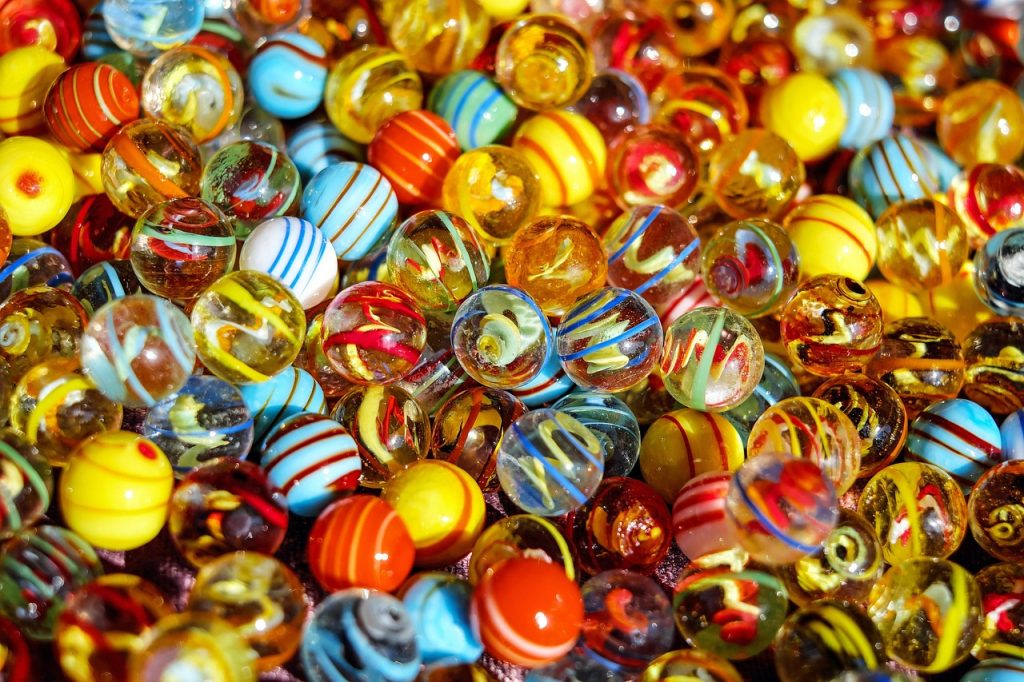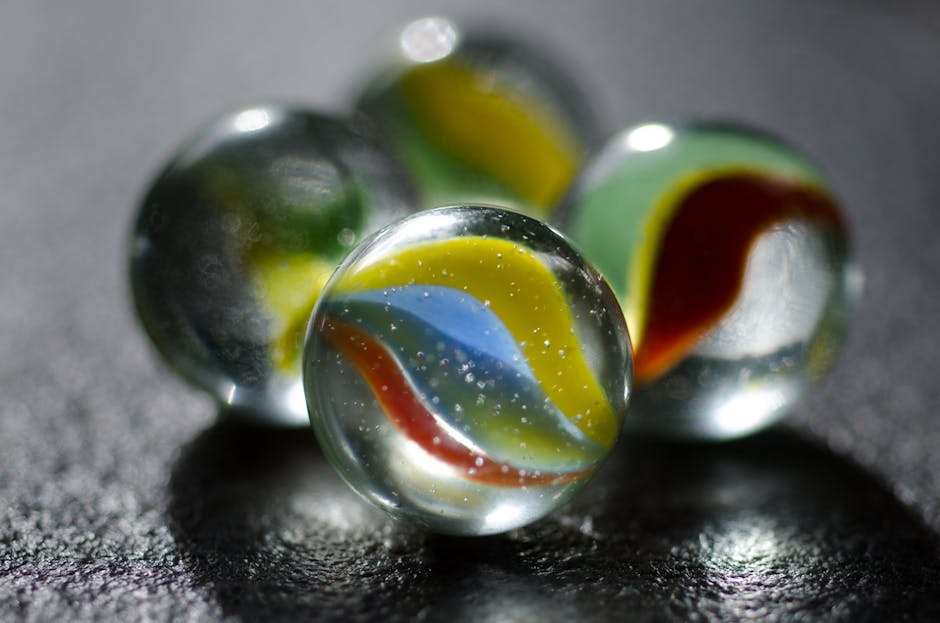
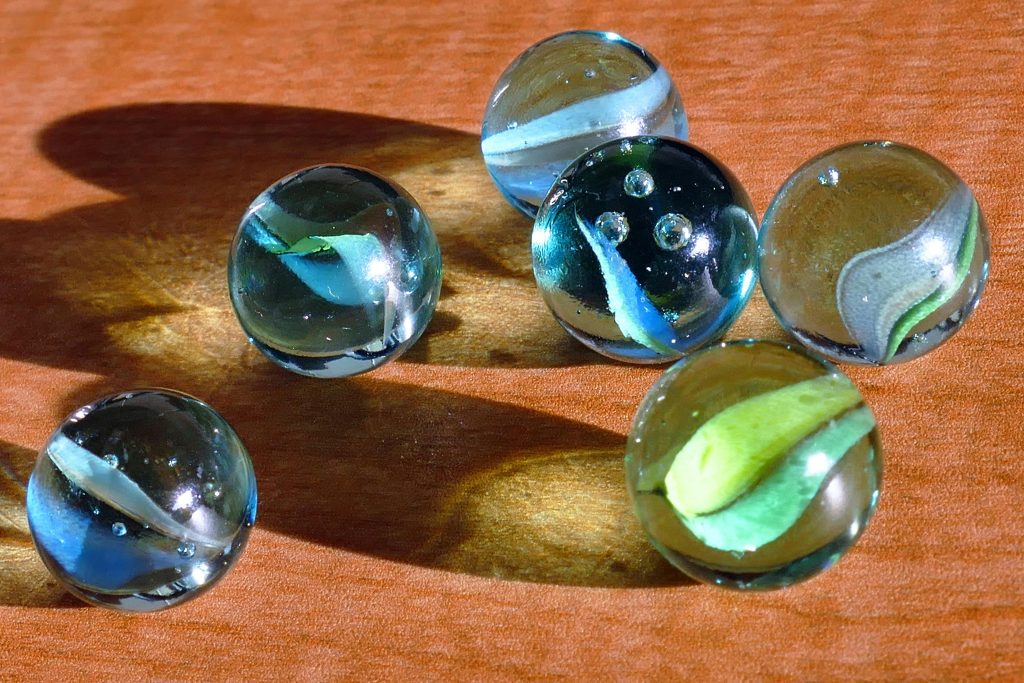
The story of American marble manufacturing represents one of the most remarkable industrial transformations in toy history. Within just a few decades, American companies revolutionized marble production, shifting from complete dependence on German imports to absolute market dominance through mechanization, innovation, and mass production. The companies that emerged during this golden age—roughly 1905 to 1960—created marbles that remain highly collectible today, each manufacturer developing distinctive styles that allow collectors to identify their work at a glance.
M.F. Christensen & Son: The Pioneer
The American machine-made marble industry began with one man’s vision. Martin Frederick Christensen, a Danish immigrant and skilled machinist, revolutionized marble manufacturing when he patented the first practical marble-making machine in 1905. Operating from Akron, Ohio—a city already famous for innovation in rubber and industrial production—Christensen’s machine automated what had been an entirely handmade process for centuries.
Christensen’s invention fed glass rods through heated rollers that simultaneously melted and shaped the glass into perfect spheres, then cooled them on conveyor systems. This mechanization reduced production costs by over 90 percent compared to handmade imports, making marbles affordable for every American child while generating substantial profits for manufacturers.
The M.F. Christensen & Son Company produced marbles from 1905 until 1917, creating several distinctive types now prized by collectors. Slags combining opaque white base glass with transparent colored glass became their signature product, available in various color combinations including purple, green, blue, brown, and rare red. Each Christensen slag displays the characteristic two-color effect with the opaque and transparent glass creating dramatic visual contrast.
Christensen bricks featured opaque colors in brick-like rectangular patterns, while oxblood slags combined the company’s slag technique with deep red coloration that anticipated Akro Agate’s later oxblood innovations. The company also produced guinea marbles with speckled patterns and various transparent and translucent types.
Christensen marbles typically measure between 9/16 and 11/16 inches in diameter, with machine-made seam lines visible on close examination. The company’s relatively brief production period and the fact that many examples show play wear from a century of use make pristine Christensen marbles increasingly valuable. Collectors particularly prize unusual color combinations and larger sizes.
Akro Agate Company: The Quality Leader
When M.F. Christensen & Son closed in 1917, several employees formed new companies using similar technology. The most successful and influential became Akro Agate Company, operating in Clarksburg, West Virginia from 1914 until 1951. Akro Agate established itself as the quality leader in American marble production, creating numerous distinctive and highly collectible types.
Corkscrews rank among Akro’s most recognizable productions, featuring spiral patterns that twist through transparent or translucent base glass. These marbles came in countless color combinations, with names like Carnelian (red and white), Popeye (red, yellow, and blue), Ade (lemon-lime and white), and Sparkler (clear with colored ribbons). The corkscrew pattern resulted from feeding different colored glass into the machine simultaneously, creating spirals as the rollers shaped each marble.
Patches or Popeyes featured distinct patches of opaque color applied to transparent base glass, creating marbles with bold, asymmetrical designs. The random placement of color patches ensures that no two patches are exactly alike, adding individual character to mass-produced marbles.
Oxbloods represent Akro Agate’s most legendary and valuable production. These rare marbles feature deep brownish-red coloring throughout, created through specific glass chemistry and controlled oxidation. The difficulty of achieving consistent oxblood coloring limited production, making authentic examples scarce and highly sought-after. Prices for mint-condition Akro oxbloods regularly reach hundreds or even thousands of dollars.
Akro also produced excellent slags in numerous color combinations, moonie marbles with fluorescent glass that glows under black light, lemonades and limeades with distinctive translucent yellow-green coloring, and countless other types. The company’s commitment to quality control meant their marbles typically display superior glass clarity, consistent sizing, and well-executed patterns.
Peltier Glass Company: Innovation and Variety
Peltier Glass Company of Ottawa, Illinois operated from 1886 as a general glass manufacturer before entering marble production around 1920, continuing until 1968. Peltier distinguished itself through relentless innovation, creating more named marble types and pattern variations than any other American manufacturer.
Rainbows became Peltier’s signature early production, featuring multicolored ribbons swirling through transparent base glass. The National Line Rainbows, Superman, Liberty, and other named varieties each displayed specific color combinations that collectors now identify and categorize meticulously. The ribbons typically show more colors than Akro’s corkscrews, creating vibrant, festive appearances.
Comic strips or picture marbles represented Peltier’s most innovative achievement. These marbles featured fired-on decals of comic strip characters, animals, or other images protected beneath transparent glass. Popular figures included Tom Mix, Kayo, Betty Boop, Andy Gump, and Cotes Master Loaf characters. The decals were applied to opaque white base marbles, creating miniature collectibles that appealed to children beyond mere gameplay.
Peerless Patches featured Peltier’s version of the patch design, with distinct colored areas on transparent base glass. The company also produced slags, cats-eyes, clearies (transparent single-color marbles), and numerous specialty types including Golden Rebels with metallic gold patches and Christmas Trees with distinctive red and green coloring.
Peltier’s extensive product line and long production period mean their marbles appear frequently in collections, though certain types—particularly mint comic strips and rare color combinations—command significant prices.
Marble King: Longevity and Evolution
Marble King, founded in 1949 in Paden City, West Virginia, represents both the late flowering of American marble manufacturing and its successful adaptation to changing markets. The company continues operating today, making it the longest-running American marble manufacturer and one of very few surviving from the golden age.
Early Marble King production from the 1950s and 1960s now attracts serious collector interest. Rainbow Reds featuring vibrant red with other colors swirled through clear glass became an early signature. The company also produced Bumblebees (black and yellow), Watermelons (pink and green), Tigers (orange and black), and countless other color combinations using their distinctive manufacturing process.
Marble King’s Spiderman marbles featured web-like patterns, while their Rainbows incorporated multiple color ribbons through clear base glass. The company also became known for producing industrial marbles for non-toy applications, helping sustain operations as children’s marble games declined in popularity.
Unlike earlier manufacturers that ceased operations entirely, Marble King adapted to changing markets while maintaining production. This continuity complicates collecting slightly, as distinguishing vintage Marble King marbles from more recent production requires understanding subtle changes in glass formulations, colors, and manufacturing details that evolved over decades.
Other Notable Manufacturers
Several other companies contributed significantly to American marble manufacturing during the golden age. Christensen Agate Company (no relation to M.F. Christensen despite the name) operated from 1925-1933, producing highly collectible slags, swirls, and unique types including electric colors and guinea varieties. Their brief production period and distinctive patterns make Christensen Agate marbles particularly desirable.
Vitro Agate Company began production in 1932 and continued into the 1990s, creating numerous cat’s-eye varieties that dominated later marble production. Their All-Reds, Parrot cat’s-eyes, and Hybrid cat’s-eyes remain popular with collectors focusing on that marble type.
Champion Agate Company produced marbles briefly in the 1930s, while Master Marble Company operated from 1930-1941, creating distinctive sunburst patterns and other collectible types before selling machinery to Berry Pink who formed Master Glass Company.
The Legacy and Collectibility
The American machine-made marble industry’s golden age created an enormous variety of collectible marbles, each manufacturer developing recognizable styles that allow collectors to identify makers with increasing accuracy. Understanding these companies, their production periods, and their distinctive patterns forms the foundation of serious marble collecting.
Values vary enormously based on manufacturer, type, condition, and rarity. Common Akro corkscrews might sell for a dollar or two, while rare Akro oxbloods command thousands. Mint Peltier comic strips can bring hundreds of dollars, while common Rainbows remain affordable. Christensen slags in unusual colors or large sizes significantly outvalue common examples.
The companies that defined American marble manufacturing created not just toys but miniature works of industrial art, each marble reflecting the innovation, competition, and creativity that characterized American manufacturing at its peak. Their legacy endures in collections worldwide, preserving a uniquely American chapter in glass artistry and childhood play.