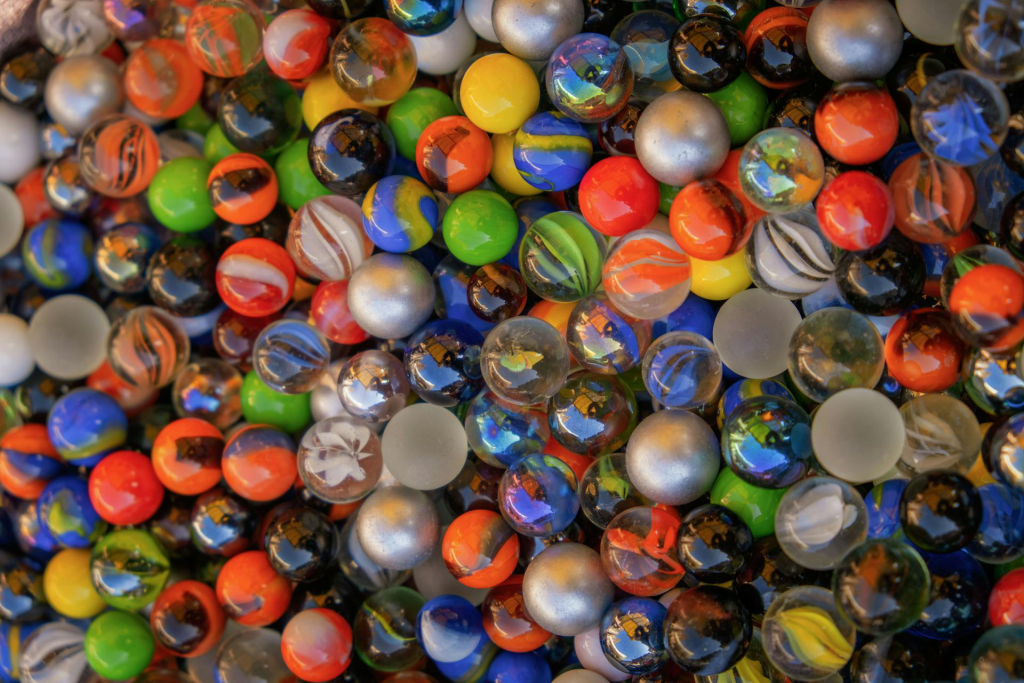

In the captivating world of antique marble collecting, where tiny glass spheres encapsulate history, artistry, and nostalgia, condition reigns supreme. These marbles, crafted from the mid-19th century onward, range from handmade German swirls to machine-made American varieties produced by companies like Akro Agate and Christensen Agate. Collectors prize them for their colors, patterns, and rarity, but the true determinant of value lies in their physical state. The marble grading scale provides a standardized framework to assess this, blending descriptive categories—Minted, Near Mint, Good, and Collectible—with a numerical system from 1 to 10. This scale helps buyers and sellers communicate effectively, ensuring fair transactions in a market where a pristine piece can fetch hundreds or thousands of dollars, while a worn one might be worth mere cents. Understanding Mint, Near Mint, and Good conditions is essential for enthusiasts, as these grades encompass the majority of collectible marbles and directly influence appraisal and desirability.
The grading system evolved from the subjective opinions of early collectors into a more structured approach adopted by auction houses, online forums, and reference guides. It accounts for both factory-original features and post-production wear. Descriptive terms offer a quick overview, while numerical scores provide precision, often subdivided into plus (+) or minus (-) for finer distinctions. For instance, a marble might be labeled “Near Mint (8.5)” to indicate mid-range within that category. Grading is inherently subjective, influenced by lighting, magnification, and personal bias, but consensus emerges from community standards. Experts like those at Block’s Marble Auctions emphasize that all marbles start as mint from the factory, but time and use degrade them. Key factors include surface damage such as chips, flakes, moons (subsurface fractures), bruises (dull spots), scratches, and pitting from environmental exposure.
Mint condition represents the pinnacle of preservation, denoting marbles that appear as they did when leaving the factory. Numerically, this spans from 9.0 to 10.0, with 10.0 being theoretically perfect but exceedingly rare due to inherent manufacturing variances. A mint marble exhibits no post-production damage—no hit marks from play, no chips or flakes from impacts, and no scratches from handling. However, it may include “as-made” flaws, which are acceptable and even desirable as they authenticate the piece. These include minor melt marks, annealing fractures (from cooling), surfaced bubbles, or pontil scars on handmade marbles where the glass was severed from the cane. For machine-made marbles, faint contact marks from tumbling or packaging are permissible.
Subdivisions within mint add nuance. Some collectors recognize “Wet Mint” (9.8-9.9), describing marbles with an exceptional glossy sheen, as if freshly polished, showing no handling wear whatsoever. Standard Mint (9.4-9.7) allows for negligible signs of age, like faint surface haze, but nothing detracting from the overall luster. Mint- (9.0-9.3) might have minor incidental flaws, such as tiny fleabites or pocket wear, but these are insignificant. Handmade antiques from the 1800s, like sulphides with embedded figures or Lutz with copper aventurine, are more leniently graded in mint due to their artisanal nature—rough pontils are expected, not penalized. In contrast, machine-made marbles from the early 1900s demand near-flawless uniformity for mint status.
Achieving mint requires meticulous care: marbles stored in original boxes or away from light and humidity preserve their factory polish. Dug marbles—those excavated from old dump sites—rarely reach mint, as soil acids cause pitting. Appraisers inspect under 10x magnification in bright light, rotating the marble to check all surfaces. Wetting the marble simulates original shine, revealing hidden dullness. A true mint marble’s value soars; for example, a mint Akro Agate corker might sell for $100, while lesser grades plummet. Collectors debate whether refurbished marbles—those professionally polished—can be mint, but most agree restoration lowers authenticity and value, distinguishing them from originals.
Transitioning to Near Mint, this grade acknowledges light usage while maintaining high appeal. It covers 8.0 to 8.9 numerically, bridging pristine and played-with states. Near Mint marbles show minor evidence of handling or play, such as tiny subsurface moons, small flakes, or pinprick chips—imperfections visible but not dominating. These damages should not obscure the design or core, and the surface retains most of its gloss. For instance, a Near Mint+ (8.7-8.9) might have one or two fleabites or mild scratches, while Near Mint (8.3-8.6) could exhibit slightly more, like clustered hit marks on one side from pocket carry. Near Mint- (8.0-8.2) borders on heavier wear, with potential for small bruises or annealing extensions.
This grade is common for marbles that saw brief childhood play but were then stored. Handmade varieties tolerate more irregularities here, as their charm lies in uniqueness. A Near Mint German swirl might have a faint moon from a glancing blow, yet its vibrant ribbons remain vivid. Machine-made pieces, like Peltier rainbos, are scrutinized more harshly—any chip, even tiny, drops them from mint. Grading challenges arise in distinguishing as-made flaws from damage; experts advise checking symmetry: play wear is often asymmetrical. Value-wise, Near Mint retains 80-90% of mint prices, making it accessible for collectors building sets without breaking the bank. Auctions show Near Mint marbles selling robustly, as they offer beauty without perfection’s premium.
Good condition signifies marbles that have endured significant use, appealing to those valuing history over aesthetics. Ranging from 7.0 to 7.9, Good marbles display numerous hit marks, subsurface moons, chips, flakes, or bruises covering up to half the surface. The core and pattern are still discernible, but wear is evident—dullness from abrasions, pitting from dirt, or cracks from impacts. Good+ (7.7-7.9) might have moderate damage clustered in areas, allowing clear viewing from certain angles. Mid-Good (7.3-7.6) shows balanced wear, while Good- (7.0-7.2) verges on heavy damage, with possible large chips or extensive hazing.
These are often “player” marbles, used in games like ringer or pots, bearing battle scars that tell stories. Dug examples frequently fall here due to environmental degradation. While less valuable—typically 50-70% of mint—Good marbles attract budget collectors or those seeking authentic patina. A Good Christensen Agate guinea, for instance, might fetch $20-30, versus $100 mint. Subtle distinctions matter: one large chip can demote from Near Mint to Good.
Grading involves tools like loupes, calipers for size (affecting value), and reference books. Communities on forums like Marble Connection debate nuances, such as whether a “wet mint” loses grade if sheen fades. Photos can mislead, so in-person or video appraisals are preferred. Impact on value is stark: damage devalues proportionally, with rarity mitigating losses for uniques.
In essence, the marble grading scale demystifies condition, empowering collectors to appreciate Mint’s perfection, Near Mint’s gentle wear, and Good’s storied resilience. Whether pursuing a 10.0 sulphide or a 7.5 swirl, mastering this scale enhances the joy of collecting these glassy gems.