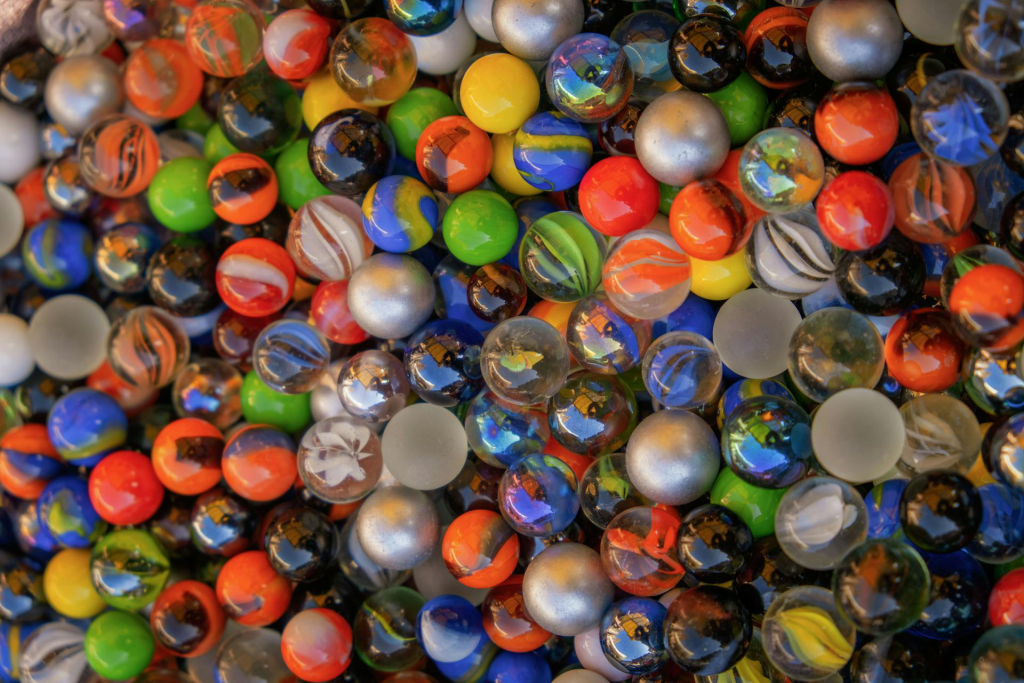
Marble collecting raises numerous questions for both beginners and experienced collectors. This comprehensive FAQ addresses the most common questions submitted by collectors, covering identification, valuation, buying, selling, and preservation of vintage and antique marbles.
How do I know if my old marbles are valuable?
Several factors determine whether your marbles have significant value. First, examine whether they’re handmade or machine-made by looking for a pontil mark (handmade) or cutoff lines (machine-made). Handmade marbles are typically more valuable, especially those produced in Germany between 1850 and 1920.
Size matters considerably in marble valuation. Marbles larger than one inch diameter command premiums, while those under half an inch sell for less regardless of type. Check the condition carefully using good lighting—chips, cracks, and heavy wear significantly reduce value even for rare types.
Specific types carry premium values. Lutz marbles with goldstone, sulphides with embedded figures, and certain rare patterns like Indian swirls or Joseph’s Coat end-of-days often sell for $100 to several thousand dollars. Common machine-made marbles from the 1930s-1960s typically sell for $1-20 each unless exceptionally rare.
The most valuable marbles combine large size, handmade construction, rare type or color combination, and mint or near-mint condition. A large mint condition Lutz marble might sell for $5,000-10,000, while a small machine-made common type in played-with condition might be worth $2-5.
What’s the difference between antique and vintage marbles?
Collectors generally define antique marbles as those made before 1950, with the term most commonly applied to handmade German marbles from 1850-1920 and early American machine-made marbles from 1900-1940. These pieces are typically 75-175 years old and represent historical manufacturing techniques.
Vintage marbles usually refer to machine-made American marbles from roughly 1920-1970, particularly pieces from classic manufacturers like Akro Agate, Christensen Agate, Peltier Glass, and others. While not as old as true antiques, many vintage marbles are collectible and valuable, especially rare colors or patterns.
The distinction affects pricing, with handmade antique marbles generally commanding higher prices than vintage machine-made examples of similar size and condition. However, rare vintage marbles from desirable manufacturers can exceed common antique marble values.
Are marbles from the 1950s worth anything?
Yes, many 1950s marbles have collectible value, particularly those from established American manufacturers. Companies like Vitro Agate, Champion Agate (later Gladding-Vitro), and Master Marble produced distinctive types during this decade that collectors actively seek.
Vitro Agate’s “All Red” marbles from the 1950s, for example, sell for $5-20 each depending on condition. Their “Parrot” pattern (green and yellow) and “Tiger Eye” (brown and yellow) bring similar prices. Champion’s “Furnace Swirls” in unusual colors can sell for $10-50.
The 1950s also saw production of “Cat’s Eye” marbles—clear glass with internal vanes of color. While common examples sell for under $1, rare color combinations or larger sizes in mint condition might bring $5-20.
Modern collectors appreciate 1950s marbles for their vibrant colors, quality construction, and nostalgic appeal. Complete sets or rare colors command premium prices at marble shows and online auctions.
How can I tell if a marble is handmade?
Handmade marbles display a pontil mark—a small rough or smooth circular area where the marble was cut from the glassmaker’s punty rod. This mark appears as a distinct spot, often with a slight raised rim or rough texture. Examine your marble under good light, rotating it to find this characteristic mark.
The glass itself shows subtle irregularities in handmade marbles that machine production cannot replicate. Colors may vary slightly in tone across the marble, patterns won’t be perfectly symmetrical, and the overall shape might be slightly oblong rather than perfectly spherical.
Handmade marbles typically feature more complex, intricate patterns than most machine-made types. Swirls, bands, and internal structures in handmade marbles show variations and irregularities that reflect individual craftsmanship rather than mechanical precision.
Size provides another clue. While handmade marbles exist in various sizes, those larger than 1.5 inches are almost certainly handmade, as early marble-making machines couldn’t produce very large sizes efficiently.
What are the most valuable types of marbles?
Lutz marbles with goldstone rank among the most valuable types, with exceptional examples selling for $5,000-15,000. These handmade German marbles feature copper-flecked aventurine glass creating a glittering effect, especially prized in rare color combinations like Indian Lutz (black with goldstone).
Sulphide marbles containing detailed figures—particularly unusual subjects like bears, political figures, or numbers—can reach $1,000-5,000 for mint examples. Common sulphides with simple animal figures sell for $100-500 depending on size and condition.
End-of-day onionskin marbles in vibrant multicolor combinations, particularly those with unusual color panels or mica inclusions, sell for $200-2,000. The pattern complexity and color vibrancy directly affect value.
Rare American machine-made types also command serious money. Christensen Agate Guinea marbles in unusual colors might sell for $500-2,000, while certain Akro Agate oxblood types bring $200-1,000.
How do I clean old marbles without damaging them?
Exercise extreme caution when cleaning vintage marbles, as improper cleaning can reduce value significantly. Never use harsh chemicals, abrasive cleaners, or rough cloths that might scratch the glass surface.
For routine cleaning, use lukewarm water with a tiny drop of mild dish soap. Gently wash each marble individually using a soft cloth, then rinse thoroughly with clean water and dry immediately with a lint-free cloth. This removes surface dirt and oils without risking damage.
For stubborn dirt, soak marbles briefly in plain lukewarm water to loosen debris, then use the gentle washing method. Avoid soaking marbles for extended periods, particularly older pieces where water might seep into tiny surface cracks.
Never use ultrasonic cleaners, dishwashers, or any mechanical cleaning devices. These can cause tiny chips, stress cracks, or surface damage invisible to the naked eye but detectable under magnification and detrimental to value.
Some collectors prefer not to clean antique marbles at all, believing that accumulated patina contributes to authenticity. For valuable pieces, consider consulting an experienced collector or dealer before attempting any cleaning.
Where’s the best place to sell vintage marbles?
The best selling venue depends on your marble quality, quantity, and desired effort level. For high-value marbles worth $200+, specialized marble auctions through companies like Block’s Marble Auctions or Morphy Auctions reach serious collectors willing to pay premium prices. These auctions charge commission fees of 15-25% but provide authentication and broad market exposure.
eBay works well for mid-range marbles worth $20-200, offering access to millions of potential buyers worldwide. Success requires good photographs, accurate descriptions, and competitive pricing. Expect to spend time creating listings and communicating with buyers. eBay’s fees typically total 13-15% of the sale price.
For collections or lots of common marbles, Facebook Marketplace and marble collecting groups provide direct buyer access without significant fees. You’ll receive less money per marble than careful individual sales, but the time savings can be substantial.
Local marble shows allow in-person sales where buyers can inspect pieces directly. Rent a table at regional shows for $50-150 and sell directly to collectors. This works particularly well for accumulations of common to mid-range marbles.
Selling to dealers provides immediate payment but at wholesale prices, typically 40-60% of retail value. This makes sense when you need quick liquidation or lack time for individual sales efforts.
How should I store my marble collection?
Proper storage prevents damage and maintains marble values over time. Store marbles individually or separated to prevent glass-to-glass contact that can cause chips and scratches. Use compartmentalized storage boxes, with each marble in its own section, or wrap marbles individually in soft tissue paper before placing in containers.
Avoid plastic bags for long-term storage, as some plastics can react with old glass over decades. Soft cloth pouches or acid-free tissue paper provide better protection for valuable pieces.
Store marble collections in stable temperature and humidity conditions, avoiding attics, basements, or other areas with extreme temperature fluctuations or high humidity. While glass is relatively stable, old adhesives or repairs might degrade under poor conditions.
Keep collections away from direct sunlight, which can fade some colors over extended exposure. This particularly affects certain vintage machine-made marbles with unstable pigments.
For display, use cases with individual compartments to show marbles while preventing contact. Velvet-lined display boxes work well, as do custom display cases with individual holes or compartments.
What makes a marble rare?
Rarity in marbles stems from limited production, high attrition rates, or unusual characteristics. Some marble types were produced in small quantities because they required difficult techniques or expensive materials. Lutz marbles with goldstone, for example, required specialized knowledge and materials, limiting production.
Color combinations contribute to rarity. Certain color mixes were produced briefly or in small batches, making surviving examples scarce. A common pattern in an unusual color might be considerably rarer than the standard color combinations.
Size affects rarity significantly. Very large marbles (over 2 inches) and very small marbles (under 0.5 inches) are less common than standard sizes, as these represented specialty production outside normal manufacturing ranges.
High attrition rates make some types rare. Marbles were toys subjected to hard use, breaking, getting lost, or being discarded. Types popular with children that saw heavy play are now scarcer in good condition than types that were less favored and thus preserved.
Manufacturing errors and oddities create one-of-a-kind rarities. Unusual patterns, unexpected color combinations, or construction anomalies make individual marbles unique and desirable to advanced collectors.
Can reproductions fool experienced collectors?
Modern reproductions continue improving in quality, but experienced collectors can usually detect them through careful examination. Reproductions often show too-perfect pontil marks, as modern makers understand what collectors seek and create exaggerated features.
The glass itself differs between antique and modern marbles. Old glass has a different appearance and feel, often showing very subtle surface changes from decades of exposure. Modern glass looks too fresh and perfect under magnification.
Color represents another detection method. Modern glassmakers use different compounds than historical manufacturers, producing colors that don’t quite match antique examples. This is particularly evident in greens, purples, and reds.
Wear patterns help identify reproductions. Artificial aging through tumbling creates too-uniform wear, while genuine age produces varied wear based on how the marble was played with or stored.
That said, high-quality reproductions can fool even experienced collectors on initial visual inspection. When buying expensive marbles, purchase from reputable dealers offering guarantees, or have pieces authenticated by recognized experts before committing to significant purchases.
What are pontil marks and why do they matter?
Pontil marks are small circular marks on handmade marbles created when the marble was cut from the glassmaker’s punty rod during production. The pontil mark appears as a rough spot, a smooth depression, or a small raised area, depending on finishing techniques.
Pontil marks matter because they definitively prove a marble is handmade rather than machine-made. Since handmade marbles are generally older and more valuable than machine-made examples, the pontil mark serves as a primary authentication tool.
Two main pontil types exist: rough pontils showing an unfinished rough patch, and polished pontils where the rough area was ground smooth after manufacture. Neither type is inherently more valuable, though some collectors prefer the aesthetic of polished pontils.
Machine-made marbles instead show two small marks on opposite sides where the marble was cut from a continuous stream of glass. These cutoff marks differ significantly from pontil marks in appearance and placement.
Some modern reproductions attempt to fake pontil marks, but these usually appear too perfect or too prominent. Genuine pontil marks show natural variation and weathering consistent with age.
How did marble manufacturing change over time?
Marble manufacturing evolved dramatically from handcrafted art to mechanized industry over roughly 80 years. German craftsmen dominated early production from 1850-1920, creating each marble individually using hand tools and glass-working skills passed through generations.
American manufacturers mechanized marble production starting around 1900. M.F. Christensen & Son developed the first successful marble-making machine in Akron, Ohio, producing marbles continuously from molten glass streams. This reduced costs and increased production dramatically.
The 1920s through 1940s represented the golden age of American machine-made marbles. Companies like Akro Agate, Christensen Agate, Peltier Glass, and Master Marble competed for market share, creating distinctive patterns and colors that remain collectible today.
Post-World War II production shifted toward cheaper manufacturing, with many companies closing or consolidating. Foreign production, particularly from Mexico, Japan, and later China, gradually replaced American manufacturing. Quality declined as marbles became purely utilitarian toys rather than collectible items.
Modern marble production uses highly automated processes creating perfectly spherical, uniform products at very low costs. While these serve their purpose as toys or industrial uses, they lack the character and collectibility of vintage examples.