
Christensen Agate marbles are among the most celebrated handmade and machine-assisted marbles of the early 20th century. Produced by the Christensen Agate Company (CAC) in Akron, Ohio, from 1925 to 1933, these marbles are highly prized by collectors for their artistry, vibrant colors, and unique patterns. Their legacy includes iconic designs such as flame marbles and Guinea marbles, which are still sought after today.
History of the Christensen Agate Company
The Christensen Agate Company was founded by Martin Frederick Christensen, following his earlier ventures with M.F. Christensen & Son Company. CAC was known for experimenting with innovative color techniques, blending handmade craftsmanship with the efficiency of early machinery. Despite being a relatively short-lived company, CAC left an indelible mark on marble history, producing some of the most collectible designs in American marble production.
Key Christensen Agate Marble Types
Flame Marbles
Flame marbles are perhaps the most iconic Christensen Agate design. They feature fiery streaks of red, orange, and yellow, often set against opaque or clear glass backgrounds. The “flames” appear as swirling streaks that seem to dance within the marble, giving each piece a dynamic and unique appearance. Flame marbles were often handmade or semi-handmade, which added slight variations that collectors treasure today.
Slag Marbles
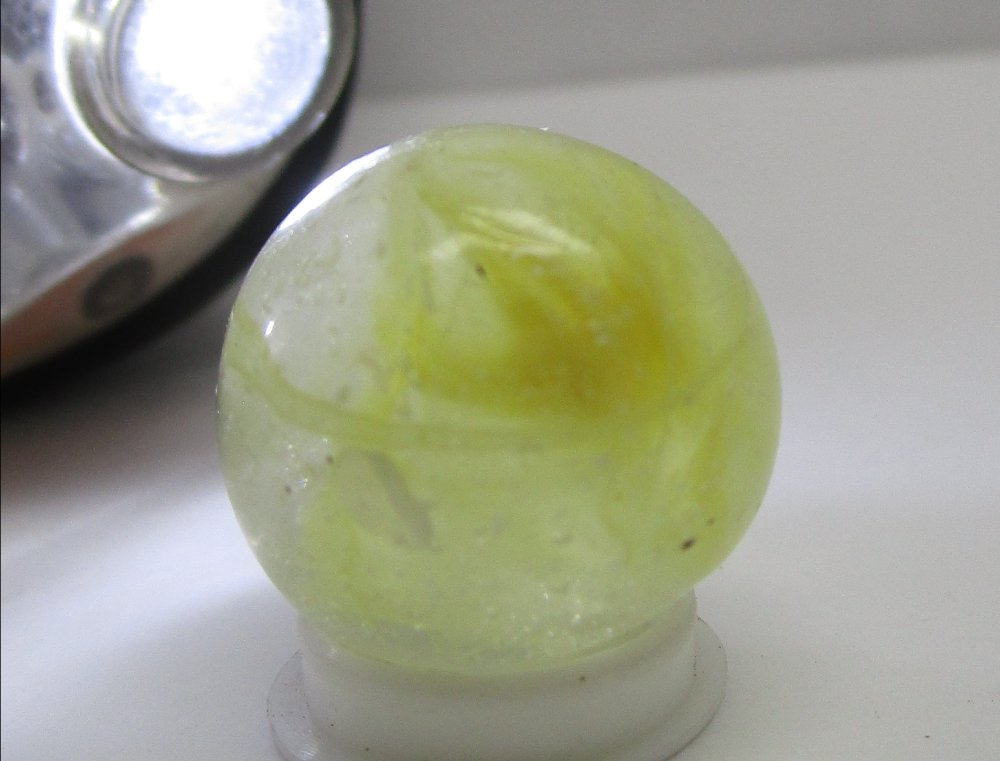
Slag marbles, another hallmark of CAC, are created from leftover or “sluggish” colored glass. These marbles are characterized by a marbled, swirled appearance, with soft blending of colors rather than the sharp patterns seen in some other marbles. Slag marbles often feature a mix of opaque and translucent colors, giving them a distinctive look.
Guinea Marbles
Guinea marbles are smaller, round marbles made from translucent glass, often with embedded swirls or ribbons of color. The name “Guinea” likely originates from the small coin of the same name, referencing their size. These marbles were highly popular during CAC’s production era and are prized today for their clarity, rich colors, and collectible value.
Identifying Christensen Agate Marbles
Recognizing authentic Christensen Agate marbles involves examining several key characteristics:
Color Patterns: Flame marbles have fiery streaks, while slag marbles feature blended, muted colors. Guinea marbles are smaller, typically translucent, and often have embedded color ribbons.
Size and Shape: Most Christensen Agate marbles range from ½ inch to 1 inch in diameter. Guinea marbles are noticeably smaller, often around ½ inch.
Handmade Features: CAC marbles often show slight variations in pattern, size, and shape due to the handmade or semi-handmade process. This may include faint pontil marks or uneven color distribution, which add to authenticity.
Surface Finish: Many CAC marbles have a glossy finish, though some older examples may show minor wear consistent with age.
Value of Christensen Agate Marbles
The value of Christensen Agate marbles is influenced by rarity, size, condition, and design type:
Flame Marbles: Large or vividly colored flame marbles can command high prices, often hundreds or even thousands of dollars.
Slag Marbles: While more common, well-preserved slag marbles are still sought after, especially if they feature unique color combinations.
Guinea Marbles: Their small size does not diminish their value; rare patterns or pristine condition can make them highly collectible.
Collectors should always examine marbles carefully for chips, cracks, or wear, as these can significantly affect value. Additionally, provenance and historical documentation can enhance a marble’s worth, particularly for CAC pieces.
Caring for Christensen Agate Marbles
Proper care is essential for preserving the beauty and value of CAC marbles:
Store individually or in padded compartments to prevent chipping or scratching.
Avoid prolonged exposure to sunlight, which can fade colors over time.
Handle with clean, dry hands to minimize oils or residues on the surface.
Why Collectors Love Christensen Agate
Christensen Agate marbles are revered not just for their aesthetic appeal but also for their historical significance. Their combination of innovative color techniques, craftsmanship, and limited production period makes them rare treasures in the world of marble collecting. Each flame marble, slag marble, or Guinea marble represents a small piece of early 20th-century American artistry.
Conclusion
From fiery flame marbles to delicate Guinea marbles, Christensen Agate represents a high point in marble artistry. Collectors prize these marbles for their vibrant colors, intricate designs, and historical significance. Understanding how to identify CAC marbles, their key types, and factors affecting value ensures that collectors can appreciate both the beauty and the history behind each piece.

Shopping Basket